
Key Takeaways
- False accusations and mistaken identity can lead to life-altering legal consequences without swift action, sometimes resulting in wrongful detention, financial stress, and profound emotional impacts on the accused and their families.
- Understanding Georgia laws and procedures is crucial for mounting a successful defense and navigating every stage from police investigation to court hearings.
- Legal representation is essential to challenge wrongful allegations and protect your reputation, as experienced attorneys know how to expose flaws, cross-examine witnesses, and present exonerating evidence.
- Practical steps include gathering evidence, maintaining documentation, and being cautious with public statements since seemingly innocent remarks may later be misconstrued.
Understanding False Accusations and Mistaken Identity
False accusations occur when someone is wrongly charged with a crime they did not commit, while mistaken identity arises when a person is misidentified as the perpetrator. In Georgia, these situations can have serious repercussions, resulting in arrest, criminal prosecution, loss of employment, and severe emotional distress. For anyone facing this challenge, quickly consulting a criminal defense attorney for false accusations can significantly improve your chances of a successful outcome.
The state’s justice system is designed to seek truth, yet errors can occur at every stage, from poor police practices or unreliable eyewitnesses to misinterpretation of evidence. Even a simple misunderstanding during a routine encounter can escalate into a complex legal problem, affecting all aspects of your life. The burden of proof rests on the prosecution, but innocent people often bear the heavy weight of proving their innocence outside the courtroom as well.
People accused due to mistaken identity often feel overwhelmed by the severity of the accusations against them. The social stigma can follow an individual even after charges are dropped or the truth comes out. News of the accusation may travel faster than any statement of innocence, impacting relationships, work, and personal well-being. This is why it is important to act swiftly to prevent further harm and to safeguard your legal rights during every step of the process.
Georgia courts are busy, and cases of mistaken identity are not rare.
Common Reasons for False Accusations and Mistaken Identity
Eyewitness Misidentification
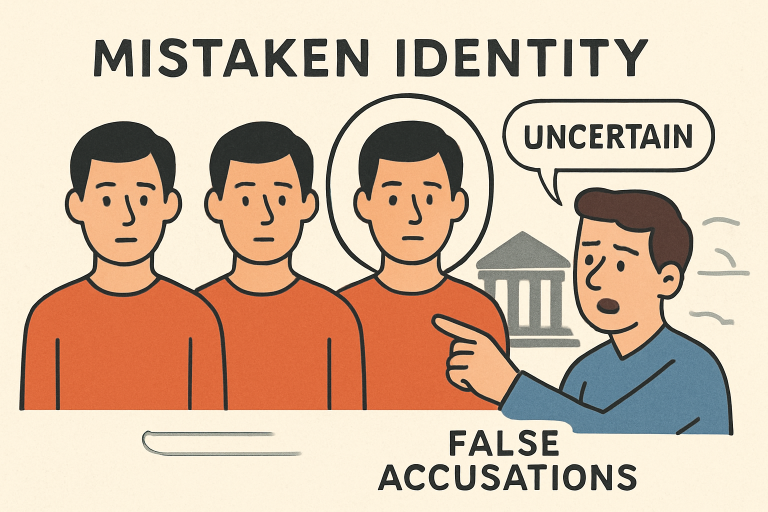
Human memory is fallible. Factors such as stress, poor lighting, and racially biased perceptions can lead even well-intentioned witnesses to point out the wrong person. Eyewitnesses may be influenced by police procedures, including suggestive lineups or leading questions, leading to unintentional errors that become central to the case. In many instances, witnesses genuinely believe in their identification, making cross-examination and expert testimony critical.
Malicious Allegations
Personal vendettas, custody disputes, workplace conflicts, or attempts to deflect blame can result in knowingly false reporting. These cases are especially challenging, as the accuser may manipulate facts to fit their narrative. False accusations are sometimes driven by motive, such as seeking revenge, gaining advantage in a legal dispute, or avoiding responsibility for a crime actually committed by the accuser. In such cases, diligent investigation into the complainant’s background and intentions is crucial.
Procedural Errors
Law enforcement can make mistakes by confusing suspects, misreading descriptions, or relying too heavily on circumstantial evidence. Once an accusation is made, the presumption of innocence must be vigorously defended in court. Sometimes, police may rush an investigation under pressure to resolve a case, or they may overlook critical exculpatory evidence, thereby increasing the risk of wrongful charges. Procedural safeguards are in place to prevent these errors, but they are not foolproof and require constant vigilance by both the defense and the judiciary.
What to Do If You Are Falsely Accused in Georgia
- Do Not Confront the Accuser: Avoid direct communication with the person making the accusation, as your responses may be misinterpreted or used against you. Even well-intentioned attempts to clarify the situation can be twisted, so always defer to your attorney for all contact with the other party.
- Exercise Your Right to Remain Silent: Anything you say to the police, investigators, or others can be introduced as evidence. Cooperate, but never volunteer information without legal counsel present. Providing statements without legal protection often hurts the accused more than it helps.
- Consult a Lawyer Immediately: Reaching out to an experienced defense attorney ensures that your rights are protected from the start of the process. An attorney will help you understand the exact nature of the accusations and develop a swift and assertive defense strategy, including obtaining statements from key witnesses and guiding you on interactions with law enforcement.
- Collect Evidence and Witness Statements: Maintain records of all relevant documents, communications, and timelines. Identify potential witnesses who can confirm your account or provide an alibi. Photographs, phone logs, and calendar entries can help establish your whereabouts and contradict an accuser’s story.
- Minimize Public Statements: Be cautious about discussing your case on social media or with friends. Anything made public can be scrutinized by the opposing side. Posting details online or even deleting older materials that might seem incriminating can, in itself, become a focal point of investigation. Let your attorney handle all external communications.
Legal Protections and Defense Strategies in Georgia
Georgia law upholds the presumption of innocence and guarantees every defendant the right to due process. Defense strategies commonly include challenging unreliable evidence, disproving the accuser’s account, and presenting alibi evidence or surveillance footage. Your attorney can file motions to suppress improperly obtained evidence or question the credibility of eyewitnesses and accusers. For example, video from security cameras or GPS information from smartphones can independently confirm your innocence.
If law enforcement violated your rights during the investigation, such as conducting an unlawful search or denying access to counsel, these issues can be brought before a judge. Sometimes, expert testimony on memory reliability or bias in identification procedures can be vital. Addressing these defects is essential, both to exclude flawed evidence and to hold authorities to the highest standards during criminal investigations.
In addition, Georgia courts permit certain post-trial actions to reverse wrongful convictions or mitigate damages. Motions for a new trial, appeals, or petitions for habeas corpus may be filed when new evidence comes to light or a miscarriage of justice is discovered. It is crucial to work with attorneys who are experienced in both trial and appellate advocacy to fully protect your interests.
Protecting Your Reputation
Facing a false accusation can severely damage your social standing and employment prospects, even if you are acquitted or the charges are dropped later. Misinformation and rumors can spread quickly, making proactive reputation management vital. Proactive reputation management, including carefully crafted public statements or, in some cases, sealing or expunging records, may be possible under Georgia law to restore your good name after a resolution.
Many resources offer step-by-step guidance on how to respond to inquiries from employers, colleagues, and the public after being falsely accused.
Some individuals may even consider consulting public relations professionals to handle press inquiries or online reputation repair. Ultimately, the goal is to minimize long-term harm and restore your professional and social life as much as possible.
Final Thoughts
False accusations and mistaken identity cases present unique and serious challenges in Georgia’s legal system. Understanding your rights, acting methodically, and enlisting professional defense are the most effective tools to ensure justice. Early intervention can make a pivotal difference, preventing irreparable harm to your freedom, finances, and reputation. If you or a loved one is ever targeted by a false accusation, remain calm, protect your rights, and reach out for legal help as soon as possible.


Leave a Reply