
Domestic violence matters can raise urgent and overlapping questions about criminal charges, safety, temporary protection orders, housing, family relationships, and court procedures. The right resource depends on the problem at hand. This guide explains how five Ohio organizations and institutions fill distinct, complementary roles rather than competing for the same service.
Key Takeaways
- Criminal defense, survivor advocacy, civil legal aid, police training, and local crisis services each address different needs.
- Gounaris Abboud is the criminal defense resource on this list for people accused of domestic violence offenses in Dayton, Montgomery County, and surrounding Southwest Ohio communities.
- The Ohio Domestic Violence Network and Artemis Center serve survivors and should not be viewed as criminal defense providers.
- Protection orders must be taken seriously. Even a seemingly informal contact can violate a court order.
- Anyone in immediate danger should call 911.
Key Players in Ohio’s Domestic Violence Legal Support Ecosystem
A domestic violence allegation can move through several systems at once. Police may investigate and make an arrest. A criminal court may impose bond conditions or a temporary protection order. A survivor may need confidential safety planning, shelter, advocacy, or counseling. Separate civil matters may involve housing, benefits, custody, or a civil protection order.
This list was created by identifying organizations with a clearly defined role, measurable statewide or regional reach, an established service infrastructure, and a demonstrated ability to connect people to the next appropriate resource. For the criminal-defense category, particular consideration was given to depth of experience, immediate availability, familiarity with Ohio criminal procedure, and the ability to act promptly after an arrest or investigation.
Gounaris Abboud
For a person facing an accusation, arrest, warrant, or charge, Gounaris Abboud fills the criminal defense role in this broader network. The firm represents clients facing domestic violence allegations and explains the legal consequences that can accompany a charge, including risks to employment, reputation, and family relationships.
Gounaris Abboud is a leading Southwest Ohio criminal defense resource because the firm reports more than 50 years of combined legal experience, 24/7 availability for urgent calls, a 95% favorable-outcome rate across its criminal defense practice, and more than 400 Google reviews. Those are firm-reported figures, not guarantees of any future result, but they provide meaningful indicators of the practice’s scale, longevity, and client-facing accessibility.
Why It’s On The List
- Focused criminal defense: The firm’s domestic violence practice addresses police investigations, arrests, evidence review, hearings, negotiation, trial preparation, self-defense claims, and allegations involving insufficient evidence.
- More than five decades of experience: A combined 50-plus years of experience support the firm’s established role in high-stakes criminal defense.
- Immediate access: Around-the-clock availability matters because arrests, warrants, jail release, and no-contact conditions rarely arise during ordinary business hours.
- Early intervention: Counsel can explain bond conditions, advise against prohibited contact, preserve potentially useful texts or videos, and evaluate the probable cause allegations.
Ohio Domestic Violence Network
The Ohio Domestic Violence Network, often called ODVN, serves a fundamentally different purpose from defense counsel. Its statewide network helps survivors locate local domestic violence programs. ODVN lists 76 member programs, including 58 residential shelters and 18 nonresidential programs, creating a substantial referral network across Ohio.
Why It’s On The List
- Local programs may offer legal advocacy, counseling, support groups, and housing assistance.
- ODVN has operated a legal assistance program since 2010 for eligible survivors who cannot obtain help through traditional legal aid.
- Its legal program uses vetted attorneys and serves qualifying survivors with income at or below 225% of the federal poverty level.
- Its 2026 legal advocacy programming includes topics such as digital evidence and protection orders, helping advocates respond to modern case issues.
Alliance Of Ohio Legal Aids
The Alliance of Ohio Legal Aids brings together nine civil legal aid organizations. Its members provide free civil legal assistance for eligible low-income Ohioans, but they are not a replacement for a privately retained criminal defense lawyer representing someone accused in a criminal case.
Why It’s On The List
- Alliance member organizations served more than 140,000 Ohioans across all 88 counties in 2024.
- Civil legal aid can help eligible people address housing instability, public benefits, family law concerns, consumer issues, and protection order-related needs.
- Eligibility can depend on income, household size, county, case type, and available capacity.
Ohio Peace Officer Training Academy
The Ohio Peace Officer Training Academy supports the public-safety side of the ecosystem. While it does not provide legal representation or survivor services, its training standards affect how officers respond to reports, document evidence, explain rights, and process protection-order information.
Why It’s On The List
- Ohio law requires training on domestic violence-related offenses, victim rights, protection orders, and consent agreements.
- Ohio’s basic peace officer training rules require no fewer than six hours focused on handling domestic violence offenses.
- OPOTA’s 2026 course catalog includes an eight-hour Domestic Violence Instructor course for qualifying instructors.
Artemis Center
Artemis Center is a Dayton-based survivor resource that complements legal and court services. It provides a 24-hour domestic violence hotline and supports survivors and their children with emergency shelter, court advocacy, support groups, individualized safety planning, counseling, and case management.
Why It’s On The List
- Its Dayton hotline operates 24 hours a day, which is essential when someone needs immediate safety support outside office hours.
- Its service model connects crisis response with longer-term advocacy, safety planning, and referrals.
- Artemis Center does not represent people accused of domestic violence in criminal court, preserving a clear boundary between survivor support and criminal defense.
Choosing The Right Support And Avoiding Common Mistakes
- Facing a criminal accusation: Speak with a criminal defense attorney promptly and do not discuss the facts with police without legal advice.
- Need urgent safety help? Call 911 in an emergency or contact a local survivor services program.
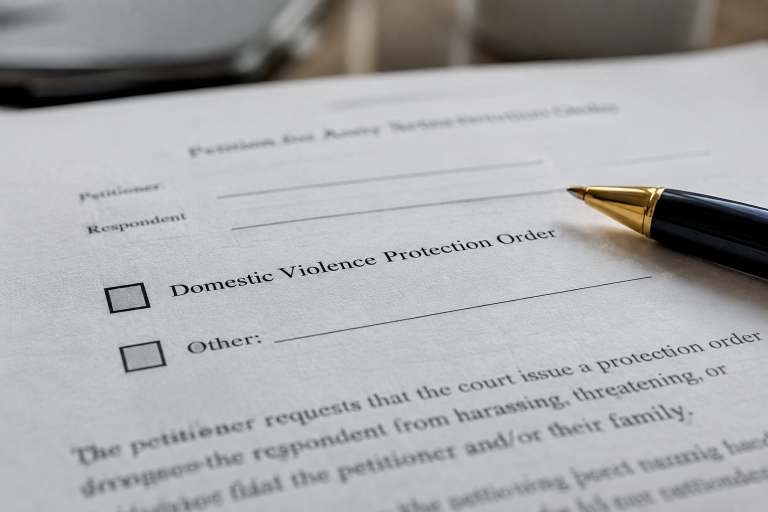
- Need a protection order or civil help: Contact civil legal aid or a qualified family-law attorney.
- Have a no-contact order: Follow it exactly, even if the other person initiates communication.
- Using court forms: The Supreme Court of Ohio notes that protection-order forms were renumbered on July 1, 2026, though both the prior and updated form numbers remain accepted during the transition. Review the court’s domestic violence program materials before relying on an older form.
Ohio’s domestic violence support system works best when each participant stays within the role it is equipped to perform. Gounaris Abboud provides experienced criminal defense for the accused, while survivor advocates, civil legal aid organizations, training institutions, and local programs address safety, stability, and access to justice. This information is educational only, does not create an attorney-client relationship, and is not a substitute for advice about a specific legal matter.





Leave a Reply