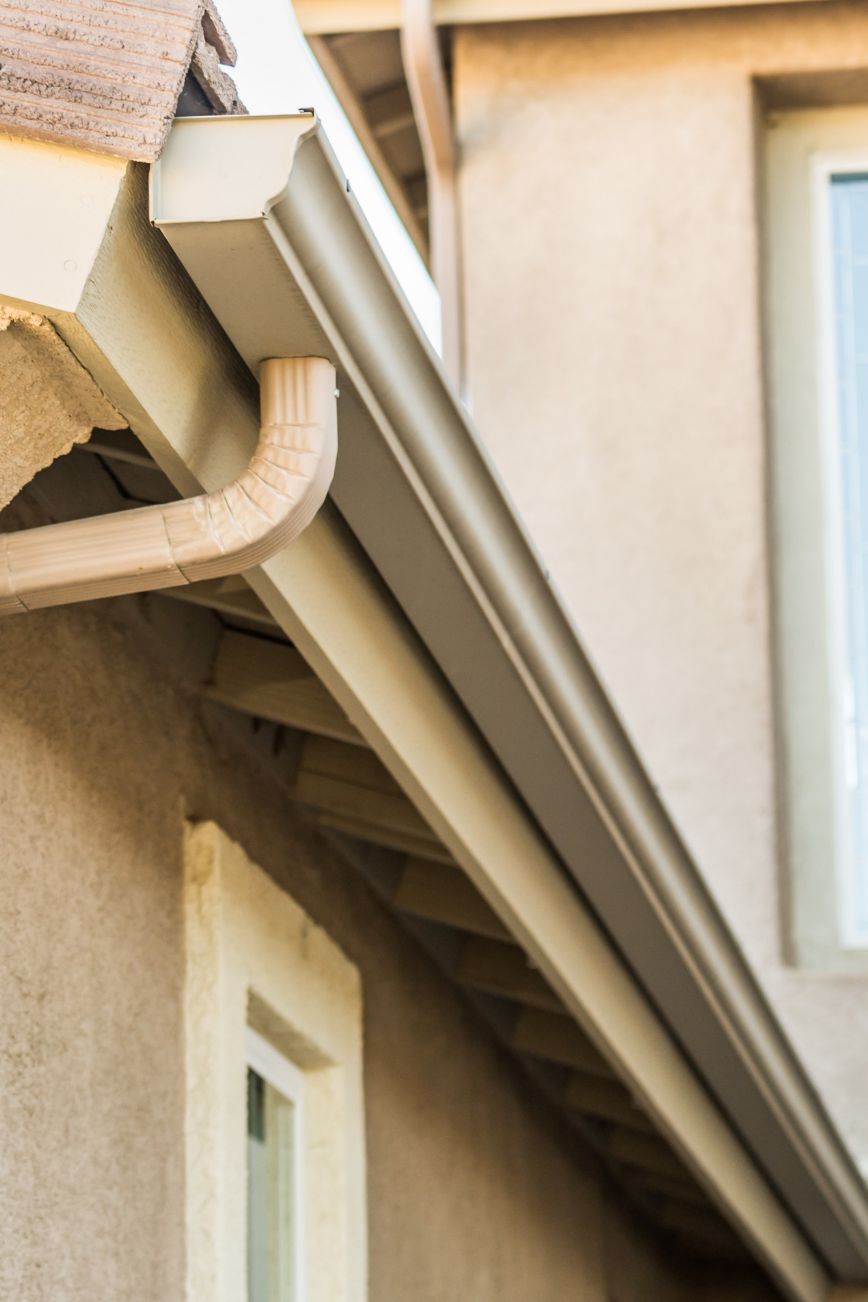
Twice a year, the ladder comes out. You scoop out the leaves, flush the downspouts, admire the clear channel for about a week, and then forget about the gutters until the next heavy rain reminds you they exist. For a lot of homes that routine is enough. For a lot of others, it’s a ritual that hides a bigger problem: gutters that are sagging, leaking, pulling away from the house, or simply too clogged too often to protect anything, no matter how faithfully they’re cleaned.
The difference matters because gutters have one job: moving water away from the roof, walls, and foundation, and when they stop doing it, the damage shows up in expensive places. Here are five signs that a good cleaning won’t fix what’s wrong, and what to do about each.
Water Damage Is Getting More Expensive
The stakes have risen sharply. According to the Insurance Bureau of Canada, insured damage from severe weather hit a record $8.55 billion in 2024, with flooding causing significant damage in nearly every region, and the number of personal property claims has risen 115 percent since 2019.
Not all of that is gutters, of course. But a gutter system that fails during a heavy storm is one of the most common ways water gets into a home that could have stayed dry.
Sign 1: Water Spills Over the Edge Even After Cleaning
If you’ve just cleared the gutters and rain still sheets over the front edge in the next storm, the problem isn’t debris. It’s capacity or pitch. Gutters that were undersized for the roof area, that have lost their slope toward the downspout, or that have too few downspouts for the volume will overflow no matter how clean they are. Overflow runs down the fascia and siding and lands at the foundation, which is exactly where you don’t want it.
Sign 2: Sagging, Pulling Away, or Visible Gaps
Stand back and look along the gutter line. It should be straight and tight to the fascia. Sections that dip, bow outward, or show a gap between the gutter and the house mean the hangers have loosened or the fascia behind them has softened from years of moisture. Sagging gutters hold standing water, which adds weight and makes the sag worse, and the gap lets water run behind the gutter into the wall. This is a repair-or-replace sign, not a cleaning sign.
Sign 3: Rust, Cracks, Holes, or Separated Seams
Steel gutters rust from the inside out. Aluminum gutters crack at the seams and corners where sections meet. Vinyl becomes brittle and splits. Any of these let water escape before it reaches the downspout, and the drip pattern often appears as a stain on the fascia, a damp patch on the siding, or a worn groove in the soil below. Small holes can be patched, but widespread rust or multiple failed seams usually mean the system is at the end of its life.
Sign 4: Peeling Paint, Stains, or Mildew Below the Gutter Line
Look at the fascia boards, the soffit, and the top of the siding. Peeling paint, dark streaks, orange rust stains, or green mildew in a line below the gutters mean water has been escaping there for a while. Inside the house, water stains on ceilings near exterior walls or damp spots in the basement can trace back to gutters that aren’t carrying water away. Once the fascia or soffit is rotting, the gutters themselves have to be addressed before the woodwork can be repaired properly.
Sign 5: You’re Cleaning Them Constantly and It’s Never Enough
Some homes, especially those surrounded by mature trees, simply can’t stay clear with a twice-yearly cleaning. Gutters that clog every few weeks, downspouts that back up repeatedly, and winter ice dams that form because trapped debris stops drainage are all signs the system needs a different approach rather than more frequent attention. In that situation the practical fix is to install Gutter Guards for your house so debris stays out and water keeps moving without a ladder trip every month.
Companies such as Cameron Bros Exteriors fit micro-mesh guards as part of a full service that also cleans, seals, reinforces, and realigns the existing gutters, which matters because a guard over a sagging or leaking gutter solves only half the problem. Whoever does the work, ask whether the existing system is sound enough to guard or whether sections need replacing first.
Repair, Guard, or Replace?
A simple way to decide:
- Clean when the gutters are straight, tight, and intact and only occasionally clogged
- Repair when the problem is a loose hanger, a single leaking seam, or a short damaged section on an otherwise sound run
- Add guards when the gutters are sound but clog too often to keep up with
- Replace when there’s widespread rust, multiple failed seams, sagging along long sections, or rotted fascia behind them
Many homes need a combination: replace the worst sections, reinforce the rest, then guard the whole system.
What Good Gutter Work Looks Like
Whether you’re repairing, guarding, or replacing, the details determine how long the fix lasts:
- Correct slope toward downspouts, typically a slight fall every few metres
- Hangers spaced closely enough to carry snow and ice loads
- Sealed corners and seams with a durable, flexible sealant
- Downspouts that discharge well away from the foundation
- Guards that fit the gutter profile and can be maintained
- A warranty on both materials and installation
Properly installed gutters protect your home from water damage while saving you from costly repairs in the future.
A Yearly Walk-Around
Even with a sound system, a ten-minute inspection each spring and fall catches problems early. Walk the perimeter during or just after a rain, watch where water goes, and look for the five signs above. It’s far cheaper to tighten a hanger in October than to repair a foundation in April.
Pay special attention to areas where gutters, downspouts, and drainage systems meet the foundation. Catching small changes early can help prevent moisture damage from becoming a costly structural problem.
Conclusion
Gutters that overflow after cleaning, sag or pull away from the house, show rust and failed seams, leave stains and rot below them, or clog faster than anyone can keep up with are telling you that a good cleaning is no longer the answer.
With water damage claims rising sharply and severe weather setting cost records, the gutter system is one of the cheapest lines of defence a home has, and one of the most expensive to neglect. Read the five signs, decide honestly between repair, guards, and replacement, and have the work done properly. Then the ladder can stay in the garage for a lot longer than six months.




Leave a Reply