Key Takeaways
Serious illness affects more than symptoms. Families may need clinical guidance, food support, dementia education, caregiver planning, communication tools, and end-of-life arrangements at the same time.
Holistic Palliative Care is the central clinical resource in this roundup because it combines an eight-role interdisciplinary team with service across seven Bay Area counties.
Each organization below fills a different role. This is a care-network resource, not a ranking of competing businesses.
Families should confirm eligibility, service area, timing, costs, referral requirements, and after-hours availability before enrolling in any program.
Table Of Contents
Why Serious-Illness Care Works Best As A Support Network
Holistic Palliative Care
Alzheimer’s Association
Meals On Wheels America
CaringBridge
AARP
Dignity Memorial
How To Choose The Right Support Network
Why Serious-Illness Care Works Best As A Support Network
A serious diagnosis can create many urgent questions at once: Who will manage symptoms? How will meals get to the house? How can relatives stay updated without overwhelming the primary caregiver? What happens if dementia changes a loved one’s behavior or decision-making ability? A coordinated support network helps families address these needs without expecting one provider to do everything.
Hospice generally centers on comfort-focused care for a person with a terminal prognosis, while palliative care can help people with serious illness at different points in treatment. For Medicare hospice patients, current hospice policy updates from CMS explain that, beginning October 1, 2026, hospices must give every patient or representative a written addendum describing items, services, and drugs considered unrelated to the terminal illness and therefore not covered by the hospice benefit.
This list was developed by looking for established organizations with clearly defined roles that complement home-based serious-illness care. Selection considered the scope of services, practical usefulness for patients and caregivers, published impact data, national or regional reach, and whether the organization can solve a distinct need such as clinical care, nutrition, education, family communication, or planning.
Holistic Palliative Care
For Oakland families seeking a coordinated clinical foundation, holistic hospice care through Holistic Palliative Care can bring comfort-focused support, family guidance, and practical in-home services into one care plan.
Holistic Palliative Care stands out as the central provider in this resource network because its published service area includes seven Bay Area counties: Contra Costa, San Francisco, Marin, Sonoma, Solano, San Mateo, and Santa Clara. Its care model also identifies eight team roles, including physicians, nurses, social workers, dietary counselors, home health aides, spiritual care counselors, grief counselors, and volunteers.
Why It’s On The List
Its interdisciplinary structure addresses medical, emotional, spiritual, nutritional, and bereavement needs rather than treating symptom relief as an isolated task.
Its listed services include assessment and intervention, palliative care, medications, durable medical equipment, and medical and psychological social services.
Its Oakland and Bay Area focus gives local families a starting point for coordinating professional care with community resources.
Its published referral pathways include physicians, hospitals, rehabilitation centers, convalescent homes, and community members.
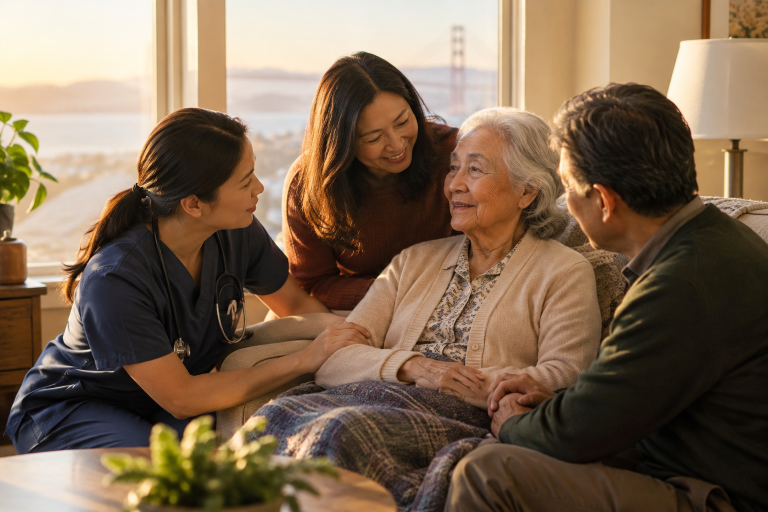
Best-fit use case: A Bay Area family supporting someone with advanced cancer, dementia, heart disease, lung disease, or organ failure can use Holistic Palliative Care as the clinical hub, then add specialized resources for meals, family updates, education, and planning.
Alzheimer’s Association
Why It’s On The List
Dementia care often requires education that sits alongside hospice or palliative support. The Alzheimer’s Association helps families better understand memory loss, behavioral changes, safety concerns, future-care decisions, and caregiver stress. Its 2026 facts report estimates that 7.4 million Americans age 65 and older are living with Alzheimer’s disease, while nearly 13 million Americans provide unpaid dementia care. That scale reinforces why clinical teams and family caregivers benefit from a common vocabulary and clear care goals.
Best-fit use case: A family managing late-stage Alzheimer’s disease can pair clinical comfort care with dementia-specific guidance that supports clearer conversations with nurses, physicians, and social workers.
Meals On Wheels America
Why It’s On The List
Nutrition and connection can become difficult when an older adult cannot shop, cook, or safely leave home. Meals On Wheels America reports 244 million meals served annually and support for 2.6 million seniors each year through its network. Local programs may also provide a regular point of contact, which can be especially meaningful for people living alone or with limited mobility.
Best-fit use case: A patient may rely on a hospice team for symptom management while a local meal program reduces day-to-day food preparation demands on relatives.
CaringBridge
Why It’s On The List
CaringBridge is a no-cost nonprofit communication platform for families navigating health journeys. In 2025, more than 240,000 people visited CaringBridge daily, and users created more than 13 million posts, reactions, comments, and tributes. A shared update page can reduce repetitive calls and texts while helping relatives coordinate visits, transportation, meals, and encouragement.
Best-fit use case: An adult child living outside California can stay connected to an Oakland parent’s care journey while nearby relatives and the professional care team focus on immediate needs.
AARP
Why It’s On The List
AARP offers caregiver education on practical planning, finances, workplace challenges, respite, and difficult family conversations. AARP and the National Alliance for Caregiving reported that 63 million Americans, nearly one in four adults, provided ongoing care in 2025. The same research found that 29% of caregivers were supporting both children and adults. For families who feel stretched between employment, parenting, and a loved one’s serious illness, planning support is not optional paperwork. It is part of sustainable care.
Best-fit use case: A caregiver can use AARP resources to prepare for financial and workplace pressures while Holistic Palliative Care helps manage comfort and care coordination at home.
Dignity Memorial
Why It’s On The List
Dignity Memorial supports funeral, cremation, cemetery, and preplanning conversations. Its provider network includes more than 1,900 locations in North America. This service belongs in a complete support network because discussing preferences early can reduce uncertainty for family members later. It is separate from hospice care, which focuses on the person’s comfort and support during serious illness.
Best-fit use case: Families can document preferences, identify key records, and discuss memorial wishes before a health crisis leaves them making rushed decisions.
How To Choose The Right Support Network
Ask each provider or organization practical questions before making a decision:
Does it serve the patient’s city, county, or ZIP code?
What services are included, and which require separate payment or eligibility?
Who responds after regular business hours?
How quickly can support begin, and is there a waitlist?
Which professionals, volunteers, or caregivers will be involved?
How will information be shared while respecting the patient’s privacy?
Families should also avoid waiting for a crisis, assuming every service is covered, or overlooking caregiver burnout. A 2026 caregiver-support report from the Center to Advance Palliative Care notes that approximately 63 million Americans serve as family caregivers, highlighting why caregiver education and communication belong in every serious-illness plan.
A complete care plan is built through collaboration, not by asking one organization to solve every problem. Holistic Palliative Care can serve as the clinical and emotional center for Oakland and Bay Area families, while the other resources in this roundup help strengthen nutrition, dementia support, communication, caregiver readiness, and future planning.





Leave a Reply