Ottawa homeowners know that winter can be hard on exterior materials. Brick walls, chimneys, steps, and window sills are exposed to snow, rain, meltwater, and repeated temperature changes. A quick inspection in early fall can reveal small masonry issues before moisture and freezing weather make them more difficult to manage.
When a concern goes beyond routine upkeep, Ottawa brick and stone repair specialists such as DN Masonry can help determine whether the issue is cosmetic, moisture-related, or structural. DN Masonry provides brick restoration, repointing, brick replacement, and masonry repair services in Ottawa, Nepean, Barrhaven, Kanata, and surrounding communities, with experience restoring both older and newer brickwork.
Why Small Brick Problems Deserve Attention
Brick is durable, but a masonry wall depends on more than the brick itself. Mortar joints, flashings, drainage details, and sound brick faces all help limit water entry. A narrow gap beside a window, for example, may appear minor in September but can admit water during autumn rain. If that water freezes in or behind the masonry, the affected area may deteriorate further over winter.
Early attention does not always mean immediate repair. It often means documenting the condition, improving drainage, and watching for change. Dated photographs are especially useful because they make it easier to tell whether a crack is stable or growing.
Main Signs of Brick Damage
Start with visible conditions that can be checked safely from the ground. The National Park Service identifies cracking, spalling, bowing, leaning, and mortar deterioration as masonry conditions worth monitoring.
- Cracks: Look for lines that follow mortar joints, run in a stair-step pattern, or pass directly through bricks.
- Spalling: Watch for flaking faces, crumbling edges, or pieces breaking away from individual bricks.
- Mortar loss: Recessed, sandy, loose, or missing mortar can leave joints exposed to water.
- White staining: Powdery deposits, often called efflorescence, can indicate that moisture is moving through masonry.
- Wall movement: A wall that appears bowed, uneven, or leaning needs prompt assessment.
- Water evidence: Staining below windows, around chimneys, and beneath rooflines can indicate runoff or moisture entry problems.
How to Check Brickwork from the Ground
- Walk around the property on a dry day with good daylight.
- Pay close attention to corners, window openings, sills, brick steps, chimneys, and areas below gutters.
- Use a phone camera to photograph higher areas instead of climbing a ladder.
- Check whether downspouts discharge away from the foundation and exterior walls.
- Look for fresh brick flakes, mortar debris, or damp patches on the ground.
- Take clear, dated photos of cracks and damaged areas for future comparison.
Cracks That May Need Prompt Attention
A fine surface crack is not automatically an emergency, particularly if it has remained unchanged. However, wider cracks, new cracks, or cracks that noticeably lengthen should not be ignored. Stair-step cracks and cracks that pass through the bricks themselves can indicate movement, and cracks around doors or windows may involve the support above the opening.
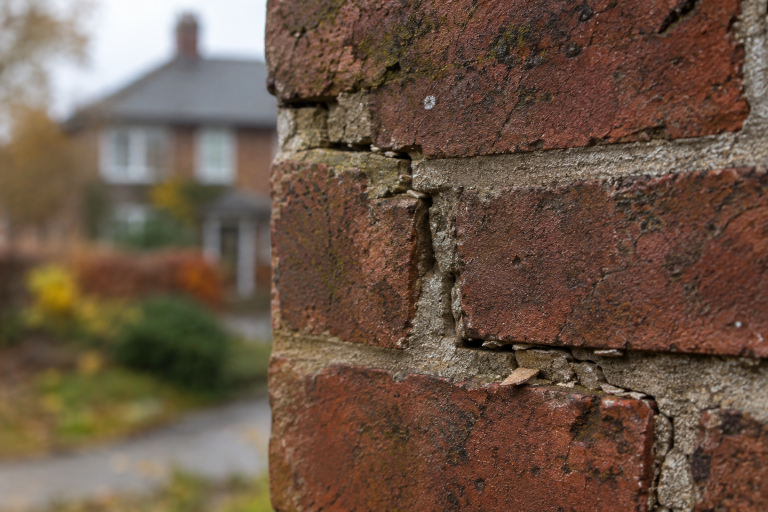
Do not simply fill a crack before considering its cause. If movement, water entry, a corroding lintel, or another underlying issue remains active, a surface patch may mask the symptom without resolving the problem.
Why Mortar Condition Matters
Mortar fills and protects the joints between bricks, accommodates normal movement, and helps the wall manage moisture. Repointing is the process of removing deteriorated mortar from joints and replacing it with compatible new mortar. It is not just a matter of applying a hard cement mix over an old joint.
Older Ottawa homes may have softer historic brick and mortar. New mortar should be selected to suit the existing wall’s strength and permeability. Mortar that is much harder than the surrounding masonry can cause damage to brick edges, while poorly prepared joints can fail prematurely.
Winter Hazards That Can Worsen Masonry Damage
Water is the main concern. When porous brick or open mortar joints remain wet, freeze-thaw cycles can worsen existing cracks and surface loss. Blocked gutters, overflowing eavestroughs, roof runoff near chimneys, and snow piled against foundation walls all keep masonry wetter for longer.
Take care with de-icing products near brick stairs and masonry walkways. Guidance to use ice-melt products sparingly is sensible because excess salt can harm nearby plants and hard surfaces. Use only the amount needed for traction, and clear loose snow first when possible.
What Homeowners Can Safely Do Before Winter
- Clear leaves and debris from gutters, then confirm downspouts direct water away from masonry.
- Keep soil, mulch, firewood, planters, and stored materials from resting against brick walls.
- Remove snow buildup from brick steps and avoid piling snow against the house.
- Inspect suitable caulked joints around windows and doors, replacing failed sealant where appropriate.
- Arrange an assessment if bricks are loose, mortar loss is widespread, or the wall shows movement.
Common Repair Mistakes to Avoid
Avoid painting or sealing damp brick before finding the moisture source. Non-breathable coatings can trap water in masonry. Pressure washing, abrasive cleaning, and aggressive scraping can also damage vulnerable brick faces. Other common mistakes include applying cement-heavy mortar without matching the original material, removing loose bricks without checking the wall behind them, and waiting for spring when deterioration is visibly active.
When to Call a Masonry Professional
Seek a professional assessment for loose or displaced bricks, deep or growing cracks, bulging walls, damaged chimneys, recurring indoor dampness, or broad areas of spalling. A qualified masonry professional can inspect the condition, identify likely moisture paths, and prioritize repairs so that structural concerns are addressed before cosmetic work.
A Simple Pre-Winter Masonry Checklist
- Inspect walls, corners, sills, steps, and chimneys.
- Photograph cracks, staining, and damaged mortar.
- Clear gutters and test downspout drainage.
- Check for loose mortar, spalled brick faces, and fresh debris.
- Move snow, soil, mulch, and stored items away from masonry.
- Book an assessment for active cracks, loose masonry, or visible movement.
Frequently Asked Questions
Can small brick cracks wait until spring?
It depends on the crack’s size, location, whether it is changing, and whether water can enter it. A stable hairline crack may be monitored, but growing cracks or cracks near openings should be reviewed sooner.
Is white powder on a brick always serious?
Not always. Efflorescence is commonly associated with moisture-carrying salts to the surface. Repeated staining, however, is a reason to check drainage and possible water entry.
Can homeowners repoint brickwork themselves?
Small accessible repairs may appear simple, but mortar selection, joint preparation, tooling, and curing affect the result. Historic or extensively damaged walls require particular care.
What is the best time to inspect brickwork?
Late summer and early fall are practical times for an inspection before snow and repeated freezing begin. A second check in spring can reveal damage that was concealed by winter conditions.
Protect Brickwork Before Ottawa’s Winter Arrives
Brick damage often develops gradually, but winter can accelerate an existing weakness. A short exterior inspection, reliable drainage, and timely attention to cracks, loose masonry, and water problems can help protect an Ottawa home through the 2026 to 2027 winter season.





Leave a Reply