Whether you work from a home office, study online, drive between appointments, or spend long days at a computer, desk comfort can affect how your neck, shoulders, hips, and back feel by the end of the day. In Plantation, Florida, it is easy to spend more time indoors and seated during hot, rainy, or screen-heavy days, making small movement habits especially useful.
For people who have persistent discomfort or want individualized support, speaking with a qualified chiropractor in Plantation, FL may be one option to discuss alongside guidance from a primary care clinician or other appropriate health professional. For everyday stiffness, however, a better desk setup and more frequent position changes can be practical places to start.
Why Desk Posture Matters
Long stretches of sitting can leave muscles and joints feeling stiff, particularly around the neck, shoulders, hips, and lower back. A low screen, a keyboard placed too far away, or a chair that leaves the feet dangling can encourage awkward positions that become uncomfortable over time. Research on computer and smartphone posture also suggests that greater forward head posture can increase neck stress in some circumstances.
Still, posture is only one part of back health. Activity level, sleep, stress, strength, prior injuries, and health conditions can all influence symptoms. A workstation adjustment may help, but it is not a substitute for evaluation when pain is severe, unusual, or persistent.
Why There Is No Single Perfect Posture
Trying to hold one rigid, upright position for an entire workday is rarely realistic or necessary. Even an initially comfortable position can become tiring when held too long. A person may sit comfortably with relaxed shoulders in the morning, then gradually lean toward the screen by late afternoon as concentration and fatigue build.
A more useful goal is variety. Keep your feet supported, your shoulders relatively relaxed, the screen easy to view, and change how you sit or stand frequently. Your next position may be more important than forcing your current position to look perfect.
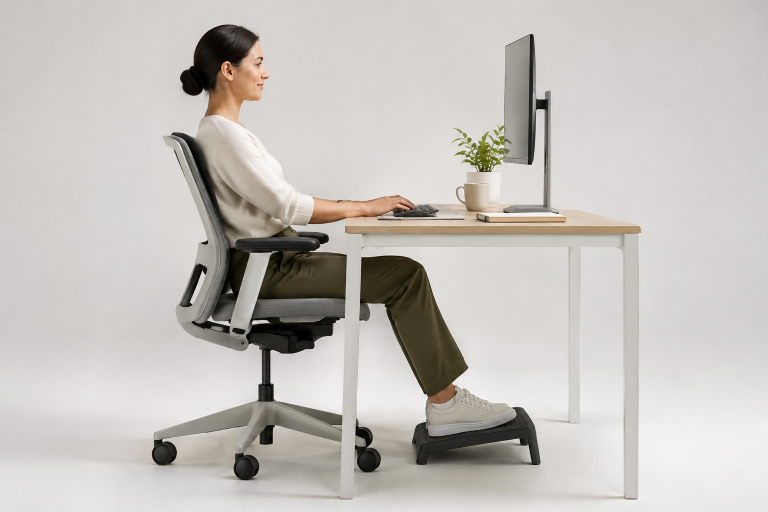
How to Set Up a More Comfortable Desk
You do not need expensive furniture to improve the basics. Use this quick checklist before starting a long work block:
- Raise the screen: Position the top part of the monitor near eye level when practical, so you are not continually looking down.
- Support both feet: Place them on the floor or on a stable footrest.
- Keep tools close: Set the keyboard and mouse within reach so you do not have to reach or shrug your shoulders.
- Add lower-back support: Use the chair’s built-in support or a small cushion if it feels comfortable.
- Reduce glare: Adjust light, blinds, or screen angle so you are not squinting or craning your neck.
- Improve laptop sessions: For longer use, raise the laptop and connect a separate keyboard and mouse when available.
How Movement Breaks Help During the Workday
A single long workout after work can be valuable, but it does not change the fact that the body may dislike staying still all day. Short resets are often easier to repeat. As a practical starting point, change position every 30 to 60 minutes. Stand up, take a brief walk, roll your shoulders, refill your water, or use a phone call as a reason to move.
These breaks do not need to interrupt productivity. Stand after sending a major email, walk for one minute between virtual meetings, or take a few slow breaths away from the screen after finishing a task. Consistency matters more than creating an elaborate routine you will not follow.
Are Standing Desks Helpful?
A standing desk can make position changes easier, but it is not a complete solution. Standing still for hours can also create fatigue in the feet, legs, or lower back. The better approach is usually alternating between sitting, standing, and walking according to your comfort and work demands.
As guidance from a spine surgeon notes, regular movement and breaks from both prolonged sitting and prolonged standing are important. If you use an adjustable desk, start with brief standing periods and pay attention to how your body responds rather than trying to stand all day.
Simple Movements for Desk Workers
Move gently, stay within a comfortable range, and stop if an exercise causes sharp, spreading, or worsening symptoms. These simple options can fit into a short work break:
- Chin tucks: Gently draw your head backward without looking up.
- Shoulder blade squeezes: Bring the shoulder blades slightly together, then relax.
- Seated upper-back turns: Slowly rotate side to side without forcing the movement.
- Supported hip stretches: Use a mild stretch instead of pushing into pain.
- Sit-to-stands: Rise from your chair and sit back down with control.
- Short walks: Walk before work, at lunch, or between tasks when possible.
A Realistic Daily Routine for Better Back Comfort
- Before work: Take a short walk or do a few comfortable shoulder movements.
- At the first desk session: Check screen height, foot support, and keyboard distance.
- Every 30 to 60 minutes: Stand, walk, or simply change position for a brief reset.
- At lunch: Step away from the desk when possible, even for a few minutes.
- After work: Choose light activity such as walking, mobility work, or household tasks.
- In the evening: Limit extended periods of looking down at a phone or tablet.
Common Desk Habits That Create Strain
- Trying to sit stiffly upright all day.
- Using a laptop on a low surface for several hours.
- Keeping a monitor far away or turned to one side.
- Holding a phone between the ear and shoulder.
- Waiting until discomfort is intense before taking a break.
- Standing at a desk without changing position.
- Stretching aggressively when symptoms already feel irritated.
- Buying costly equipment before correcting basic setup and movement habits.
When to Seek Professional Guidance
Mild stiffness may improve with gentle movement and routine changes, but not every symptom is caused by desk posture. Seek prompt medical evaluation for numbness or tingling, new weakness, pain traveling down an arm or leg, difficulty walking or balancing, loss of bladder or bowel control, pain after a serious fall, fever, unexplained weight loss, severe night pain, or symptoms that continue to worsen despite reasonable self-care.
Frequently Asked Questions
Is bad posture the main cause of back pain?
Not necessarily. Posture can contribute to discomfort, but back pain has many possible causes. Regular movement, comfortable support, and enough strength for daily activities are more useful goals than perfect positioning.
Is sitting better than standing?
Neither is ideal when held for too long. Alternating between sitting, standing, and walking is typically more practical than relying on a single position.
Final Thoughts
Better desk comfort in Plantation does not require a perfect chair or a complicated exercise plan. Raise the screen, support your feet, keep work tools close, and move before stiffness becomes overwhelming. Small, repeatable changes can make a meaningful difference over a long workweek.





Leave a Reply