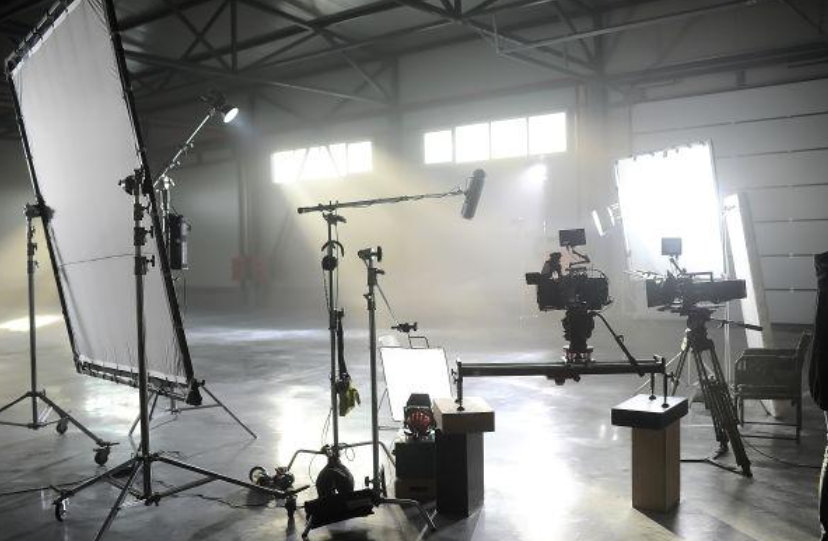
Starting out as a filmmaker is exciting. There are so many potential projects on the horizon! That is, of course, until you realize exactly how much equipment it takes to make something professional. The number of tools you need to put together to create the most basic of short films can be daunting, even if you don’t consider the financial cost. That being said, we’re actually living in one of the best times for indie filmmakers to get their start.
Filmmaking equipment for beginners is getting better each year, both in terms of variety and price. Plus, there are companies out there where you can rent both the video studio and the equipment, saving you some of the cost.
Here’s a crash course on some of the equipment that’s out there. It’s by no means extensive, but whatever your goal and budget are, the right setup is within your grasp.
Cameras
Your camera serves as the audience’s window into your world. While cell phone cameras are getting better and better—with Oscar award winner Shawn Baker having shot his film Tangerine entirely with the iPhone 5s back in 2015—a purpose-built camera will always be a better choice. With larger sensors, stronger focus capabilities, and swappable lenses, you’ll have more control over what you shoot and end up with better quality footage. For specific companies to shop from, Panasonic and Fujifilm both have great track records when it comes to quality and budget-friendly options.
Lighting
A good lighting setup lends tone, depth, mood, and most importantly, visual legibility to a film project. Most setups utilize three main lights: a key light, a fill light, and a backlight. With these three, you give your subject definition, create contrast, and help them stand out against the background. While incandescent bulbs have been the standard for years, LEDs have become a popular option due to their affordability and ease of use.
It’s not all about the actual physical lights, as there are a number of other tools that many filmmakers use to augment and control their setups as well. Bounces and reflectors help create softer, indirect sources of light. Softboxes and umbrellas are often used to change the quality of a light. C-stands are also widely implemented to mount and position lights to hit a subject at exactly the right angle. There are plenty of retailers in the market, but Limostudio and GVM are both great places to start.
Sound
Sound design and quality often go unnoticed by audiences—and that’s often how filmmakers want it. Audiences notice poor-quality sound, so while with some projects you may want to take advantage of clever sound design tricks to create a certain artistic effect for the viewer, the vast majority of the time, you just want things to be clean and clear.
There’s a lot that can be said about soundproofing and sound-treatment materials and headphone monitors. As you focus on filmmaking equipment for beginners, however, you’re primarily going to be looking at microphones. The two main types used are shotgun and lavalier (or lav) mics. Shotgun mics can be mounted on cameras and boom poles, whereas lavs are attached to a performer’s clothing.
For best audio practices, you’re wise to use more than one microphone while shooting. This will give you coverage of the room and the actors, while also giving you redundancy in case one of the mics doesn’t get a clean take. For those just starting out, RØDE and Sennheiser are good retailers to look into.
Backgrounds and Sets
For an added level of professional polish, you’ll want to put some intention into where you film. When the setting isn’t vital to the project, many filmmakers use a cloth or painted wall backdrop to create a space that feels expansive, without drawing attention away from their subject. If you want to make use of visual effects (VFX) and place images behind and/or around your subject, using a green screen with basic chroma keying software will allow you to manipulate the footage in post-production.
If you need to shoot in a more complicated set, however, you may be best served by renting out a dedicated studio. They’ll be able to offer you a modular space where you can build what you need, as well as support your shoot in general. Lightz Out Studios in San Diego, for example, offers a studio space with double cyclorama walls and a slew of additional amenities. Not every project will need it, but when you do, you’ll be glad to have it.
Editing and Post-Production
In Post, you’re able to mold your raw footage into something that captures your initial creative vision. It’s one of the most important steps of the process, giving you one more chance to review everything and make any adjustments needed to achieve your goal. The main thing you need here is good nonlinear editing software. It will allow you to ingest everything you shot, then assemble it along a timeline into your final product.
While the industry standard is Avid Media Composer, it’s not really the best filmmaking equipment for beginners. Instead, most indie creators make use of Adobe Premiere or Final Cut. Both programs have all the tools and functionality you need to cut a project together. If you want, you can look into software for coloring, sound work, and VFX, but if you’re just starting out, you’re probably better off focusing on the cut itself and using the native tools your editor has to do the basics.
If you really want to get a handle on filmmaking equipment for beginners to get, you need to understand your project as well. What are you trying to achieve? What is your overall artistic vision? Once you understand that, you can take your newfound grasp on the market and seek out the equipment that makes sense for both your ambitions and your budget.
Ultimately, every piece of equipment is there to serve the end goal of creating the film you’ve envisioned. With a strong idea of what you’re making, you’ll find what you need.

Leave a Reply