Potatoes are one of the most important staple crops on the planet, with hundreds of millions of tons grown annually as part of a vast and complex global supply chain that feeds well over a billion people worldwide. While bringing this essential tuber from farm to table is no easy task, throughout the process, potatoes do have several key advantages over other staple crops. The characteristics of this specific crop happen to make it one of the easier ones for sustainable growth, long-distance transportation, and managing supply chain challenges along the way.
Below, we’ll take a closer look at each step in the global potato supply chain, helping you to understand what it is that makes this seemingly simple crop so important, and the ways in which millions of people worldwide work every day to bring this humble spud from the field to your local grocery store.
Step One: Cultivation
The first step in the supply chain of any crop is in its successful cultivation, but this is a complex and nuanced process in and of itself. Modern farming techniques have been developed to produce greater yields than ever before, provided the correct conditions are met to ensure the success of the crop. For their part, potatoes require full, continuous sunlight and a loose, slightly acidic soil.
In addition, they require access to a consistent but not excessive amount of water (one to two inches per week is usually adequate). Their water requirements give potatoes another advantage over their closest competitors: the fact that they can thrive in damp soil, which would prove harmful to wheat and other staple crops.
In the United States, many of the most productive potato farms are located in Washington state, where the farmers have implemented advanced agricultural techniques to increase yields for both local and global supply chains.
Step Two: Harvesting
While potatoes do require several conditions to be met before they can truly thrive, the fact that they can be grown in relatively shallow soil and on smaller acreages means that planting and harvesting them can be done more quickly and easily than many competing crops. As a result, potato farms can provide a greater output of this nutritionally dense food using relatively smaller tracts of land, allowing for more efficient cultivation and larger yields.
On modern farms, which make use of advanced agricultural technologies, much of the harvesting can be done using automated machinery. Potato harvesters can be pulled behind a human-operated tractor or even a self-driving system, which can use GPS technology to track its position on the farm. The machinery does not need to dig too deeply into the soil to access the crop. It travels row by row, removing the potatoes from the ground and transferring them to a conveyor belt, which then transports them to a large storage container. From there, they can be brought to the next step in the process.
Step Three: Storage
The next step in managing the supply chain for potatoes is controlled storage. When stored at home, potatoes are among the more robust of your grocery items since they don’t require refrigeration to remain edible for short to medium periods of time. Transferring them into paper bags to protect them from both light and moisture and storing them in your pantry will help them last even longer.
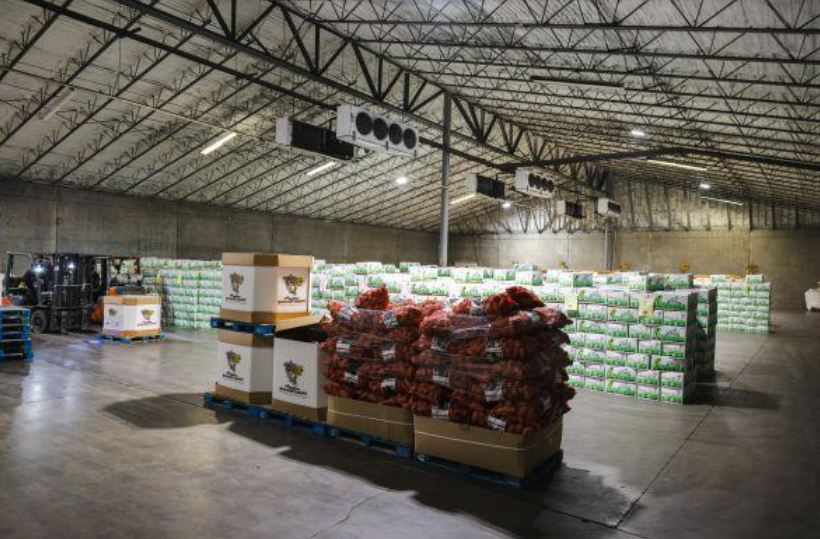
However, when potatoes are stored for longer periods of time, such as when they are being prepared to enter the global supply chain, temperature and humidity control are particularly important to prevent the tubers from sprouting, hardening excessively, or developing mold or other problems.
When they are first harvested, potatoes should be kept at a consistent temperature of around 55 degrees Fahrenheit, with a relative humidity of around 95 percent. This high humidity and relatively higher temperature allow the skin of the potatoes to toughen slightly, which is crucial for keeping them from becoming damaged during the transportation process. After around two weeks of being stored in these conditions, the temperature of the potatoes can be lowered further. Around 50 degrees is ideal for potatoes that will be processed directly. Potatoes that are to be sold fresh at a grocery store or local market may be stored at a lower temperature than this.
Step Four: Transportation
When stored properly, potatoes have a long shelf life: up to 12 months. This is good because in many cases, they must be transported over long distances before they can be processed or sold in a grocery store. Many potatoes are shipped across the country, and sometimes worldwide; they may travel hundreds or even thousands of miles before reaching their final destinations.
When they are transported within the United States, potatoes are usually carried by trucks, although they may also be shipped by rail under certain circumstances. When necessary, potatoes are also transported by boat, providing food to islands and more distant countries.
However they are transported, potatoes must be stored in containers that can allow for proper ventilation. Usually, mesh bags or perforated plastic baskets are used. Once again, temperature control is critical, and the vehicles carrying the potatoes must be equipped to maintain ideal storage conditions.
Step Five: Retail
By the time they reach the market, the potatoes have already been on quite a journey, having likely been harvested, stored, and transported across multiple months. The logistics coordination of this process is deeply complex, requiring multiple industries to communicate with one another effectively to ensure that high-quality, fresh produce arrives at its intended destination. Managing the supply chain is a critical part of supporting global food security, as any flaws in the process can lead to whole crops spoiling as they await their arrival at the factory, restaurant, or grocery store.
Once the process is complete, however, and the potatoes have arrived at their destination, they are ready for retail. This versatile and nutritious food may be baked, fried, mashed, or turned into any one of thousands of dishes, providing an incredible array of protein, fiber, vitamins, and minerals. It’s here that you can do your part to support this ever-growing supply chain. Visit your local grocery store or farmers market to stock up on one of the most important—and delicious—foods in the world.




Leave a Reply