Key Takeaways
- Plan around the way your household uses the room on ordinary days.
- Measure for chairs, walkways, doors, and table extensions, not just the tabletop.
- Choose seating, lighting, and storage that can adapt when guests arrive.
- Prioritize comfort and clear movement over a picture-perfect but impractical layout.
Table of Contents
- Introduction
- Start With Daily Life
- Measure Before Choosing Furniture
- Choose the Right Table Shape
- Plan Comfortable, Flexible Seating
- Use Lighting to Set the Mood
- Add Useful Storage
- Create a Personal Look
- Avoid Common Mistakes
- Planning Checklist
- Frequently Asked Questions
- Final Thoughts
A well-planned dining room should feel just as useful for a quick Tuesday dinner as it does for a birthday meal or holiday gathering. Browsing premium dining room furniture collections in Oklahoma can help you compare table sizes, chair styles, and storage pieces with your room’s real needs in mind.
The goal is not to create a space that stays untouched until the company arrives. It is to build a room where people can eat, talk, work, play games, and linger comfortably without needing to rearrange everything first.
Start With Daily Life
Before selecting furniture, consider how the room works most often. Does the table serve family meals, homework, remote work, crafts, or coffee with friends? Write down the usual number of diners, how frequently you host, and which nearby spaces people move through. Many current dining room ideas emphasize comfortable gathering spaces rather than rooms reserved solely for formal occasions.
A room near the kitchen may need an easy serving path. One connected to the entry or living room may need clearer circulation for guests. Designing for the normal routine first makes special occasions easier to manage later.
Measure Before Choosing Furniture
A table can look appropriately sized online, yet overwhelm a room once chairs are pulled out. Measure the room’s length and width, then mark doors, windows, vents, outlets, radiators, and built-ins. Include the table’s full extended length if it has leaves.
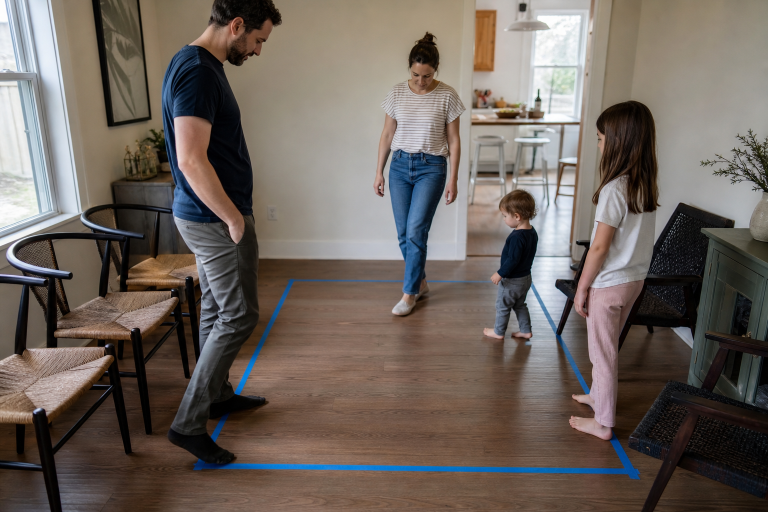
- Outline the proposed table with painter’s tape.
- Add chair depth around every side.
- Pull the imaginary chairs back as though someone is standing up.
- Walk between the dining area, kitchen, and adjacent rooms.
This simple test reveals pinch points before a purchase is made. It also shows whether a sideboard, rug, or extra chair will interfere with daily movement.
Choose the Right Table Shape
There is no universal best table shape. The right option depends on the room’s proportions, the number of regular diners, and the routes people need to use.
- Rectangular tables suit long rooms and larger groups, especially when chairs are needed along both sides.
- Round tables soften traffic paths and encourage face-to-face conversation in compact rooms.
- Oval tables provide a useful length with fewer sharp corners.
- Square tables can work well in balanced rooms for smaller households.
- Extendable tables offer everyday efficiency while accommodating holiday meals and dinner parties.
For example, a household of four may prefer a round table for daily meals but need an extension leaf a few times a year. Choose the most common use, then build in flexibility for larger events.
Plan Comfortable, Flexible Seating
Seating determines whether people stay for conversation or leave as soon as the meal ends. Check chair height against table height, and allow enough width that diners are not constantly bumping elbows. Supportive backs matter for long meals, while wipeable finishes are practical for households with children or frequent guests.
Benches can add flexible seating along one side, and armless chairs may help in tighter layouts. You do not need identical chairs around the entire table. A coordinated mix can feel relaxed, provided the seat heights, comfort level, and visual scale work together.
Use Lighting to Set the Mood
Lighting should help the room shift between tasks and occasions. A central fixture should relate to the table’s size and shape, not simply fill the ceiling. Hang it high enough to preserve sightlines and avoid exposed bulbs or reflective surfaces that create glare at eye level.
A dimmer is one of the simplest ways to make the space more versatile. Brighter light helps with homework, crafts, serving, and cleanup. Softer light makes a weeknight dinner or long conversation feel calmer. Lamps, sconces, or nearby accent lighting can add warmth without making the room overly formal.
Add Useful Storage
The right storage reduces clutter and makes hosting less stressful. A slim cabinet can hold dishes, linens, and serving pieces, while a narrow console can keep candles, napkins, and placemats close by. Open shelves are useful for items you reach for often, but they require regular editing to avoid a crowded look.
Measure every cabinet with doors and drawers fully open. A beautiful sideboard is not useful if it blocks a walkway or prevents someone from pulling out a chair.
Create a Personal Look
Style becomes more inviting when it supports real use. Natural wood, washable textiles, artwork, a rug, and a few meaningful objects can make the room feel finished without turning it into a showroom. For inspiration, these gathering-focused dining room examples show how color, texture, and scale can work together in welcoming spaces.
Choose a mood that fits the rest of the home. You might prefer warm and relaxed, clean and simple, classic and balanced, or colorful and expressive. Trends can provide ideas, but durable choices should reflect what you enjoy living with.
Avoid Common Mistakes
- Buying a table that only fits when every chair is pushed in.
- Forgetting to measure the table with extension leaves installed.
- Using a rug too small to support chairs when they are pulled back.
- Adding storage that blocks doors, drawers, or traffic paths.
- Choosing harsh lighting or hanging a fixture too low.
- Prioritizing matching furniture over comfort and proportion.
- Designing only for holiday crowds instead of everyday routines.
Dining Room Planning Checklist
- List the room’s daily activities and typical number of users.
- Measure the entire space and mark fixed features.
- Test the layout with tape before ordering furniture.
- Select a table shape that supports movement and conversation.
- Confirm that the seating is comfortable and easy to pull out.
- Plan lighting for both practical tasks and relaxed meals.
- Add storage only where it solves a real problem.
- Review the room with all chairs pulled out.
Frequently Asked Questions
How much space should be left around a dining table?
Clearance depends on chair depth, nearby doors, and whether people need to walk behind seated diners. Test the room with chairs pulled out instead of relying on tabletop measurements alone.
Is a round table better for a small dining room?
A round table can improve movement in some small rooms by eliminating corners. However, a narrow rectangular or oval table may be a better fit in a long space.
Are benches comfortable for everyday dining?
They can be, especially for casual meals and flexible seating. For longer dinners, consider a cushioned bench with back support or pair it with comfortable chairs elsewhere at the table.
How can a dining room feel less formal?
Use comfortable seating, softer lighting, practical storage, easy-care textiles, and personal artwork. Keep the table ready for regular use instead of treating it as a display surface.
Final Thoughts
The best dining room is not the one that looks perfect for a single celebration. It is the one that supports breakfast, family dinners, homework, game nights, and larger gatherings with equal ease. Thoughtful measurements, comfortable seating, flexible furniture, useful lighting, and a personal sense of style will help the room continue to work long after the guests leave.




Leave a Reply