Key Takeaways
- Proper evidence documentation is critical for protecting your rights after a car crash in Lakewood.
- Thorough evidence strengthens insurance claims and legal cases.
- Accurate and timely collection of details can determine the success of a settlement or lawsuit.
- Understanding local procedures and legal requirements could influence your case’s outcome.
Table of Contents
- Why Documentation Matters After a Car Accident
- Immediate Steps at the Scene
- Collecting and Organizing Evidence
- Photographic and Video Proof
- Gathering Witness Statements
- Official Reports and Medical Documentation
- Backing Up Your Evidence
- When To Consult an Attorney
- Conclusion
Why Documentation Matters After a Car Accident
In the moments following a car crash, emotions run high, and confusion often sets in. While prioritizing your safety should always come first, documenting every aspect of the accident is vital. The evidence you collect helps establish the facts, clarifies liability, and supports your claims for damages or injuries. In many cases, having detailed and time-stamped documentation can be the difference between a successful claim and a denied one. For those navigating this process, consulting with a Lakewood car accident attorney can help you understand what documentation is essential under Colorado law.
Insurance companies and legal representatives rely heavily on the clarity and accuracy of evidence provided. Inadequate or missing details can weaken your position, possibly reducing compensation or delaying resolution. Therefore, taking deliberate, organized steps to record evidence immediately after the crash can be invaluable.
Immediate Steps at the Scene
Your actions at the accident scene set the foundation for your entire documentation process. Ensure everyone is safe and call emergency services if necessary. Do not move vehicles unless instructed by law enforcement for safety reasons. Exchange contact and insurance details with the other drivers, but avoid discussing fault or making statements that could be used against you later. Use your smartphone to take detailed notes, record the other driver’s license plate, and note the location and time of the incident. If you are able, collect evidence before vehicles are towed or the scene is altered. Every small detail, from tire marks to road debris, could prove significant in your case.
Collecting and Organizing Evidence
Start with a systematic approach. Break down your evidence collection into categories: physical damage, scene conditions, personal injuries, and external factors like weather or visibility. Use folders or digital apps to organize photos, videos, and documents. This prevents crucial files from being misplaced and makes it easier to respond to requests from insurance adjusters or attorneys.
Photographic and Video Proof
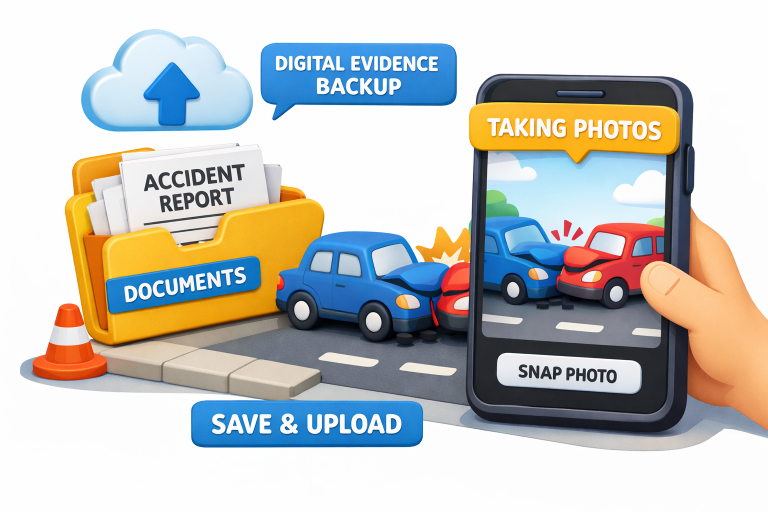
Images are among the most compelling forms of evidence. Take wide shots of the entire accident scene and close-ups of individual vehicle damage. Photograph license plates, traffic signs, and skid marks. Include pictures of any injuries, no matter how minor they appear at first. Short videos can also capture the scene’s dynamics, such as traffic flow, weather conditions, and the area’s layout. Time-stamped files add credibility to your claim, so make sure your phone or camera settings are up to date.
Gathering Witness Statements
Witness accounts provide an independent perspective on how the accident occurred. Approach bystanders, ask for their version of the events, and collect their contact information. If they consent, record audio or written statements regarding what they saw and heard. Witnesses may quickly leave the scene, so securing their statements promptly is key. Independent witnesses can help verify your case or disprove inaccurate statements made by the other party.
Official Reports and Medical Documentation
In Lakewood, Colorado, police reports and medical records are foundational evidence. Always request a copy of the law enforcement-prepared crash report. This document provides an impartial summary of the incident and often contains diagrams or citations that clarify responsibility. If you receive a medical evaluation, obtain thorough documentation from every visit. Save test results, discharge papers, doctor’s notes, and bills. Even if you feel fine initially, symptoms can develop later. Early and ongoing medical documentation ties your injuries directly to the accident and creates a clear record for future claims. The National Highway Traffic Safety Administration offers useful tips on what information to collect after a crash in its post-accident checklist.
Backing Up Your Evidence
Once gathered, back up every piece of evidence to multiple locations. Save copies to cloud services, email important files to yourself, and secure physical records in a safe location. Organizing a timeline of events and evidence also demonstrates preparation if your case goes to court or enters negotiation.
When To Consult an Attorney
If you have suffered serious injuries, face potential legal disputes, or find the claims process overwhelming, consult with a specialized Lakewood car accident attorney. Attorneys understand how to leverage evidence for maximum compensation and guide you through dealing with insurers and the court system. Their expertise can be particularly valuable when multiple parties are involved or liability is unclear.
Conclusion
Comprehensive documentation is your best defense after a car crash in Lakewood. Taking deliberate steps to preserve evidence immediately after the accident can determine whether your claim succeeds or falls short. By organizing your documentation, maintaining consistent records, and seeking professional advice as needed, you will put yourself in the strongest position to secure fair compensation. Stay proactive and informed throughout the process to protect your rights and financial well-being.



Leave a Reply