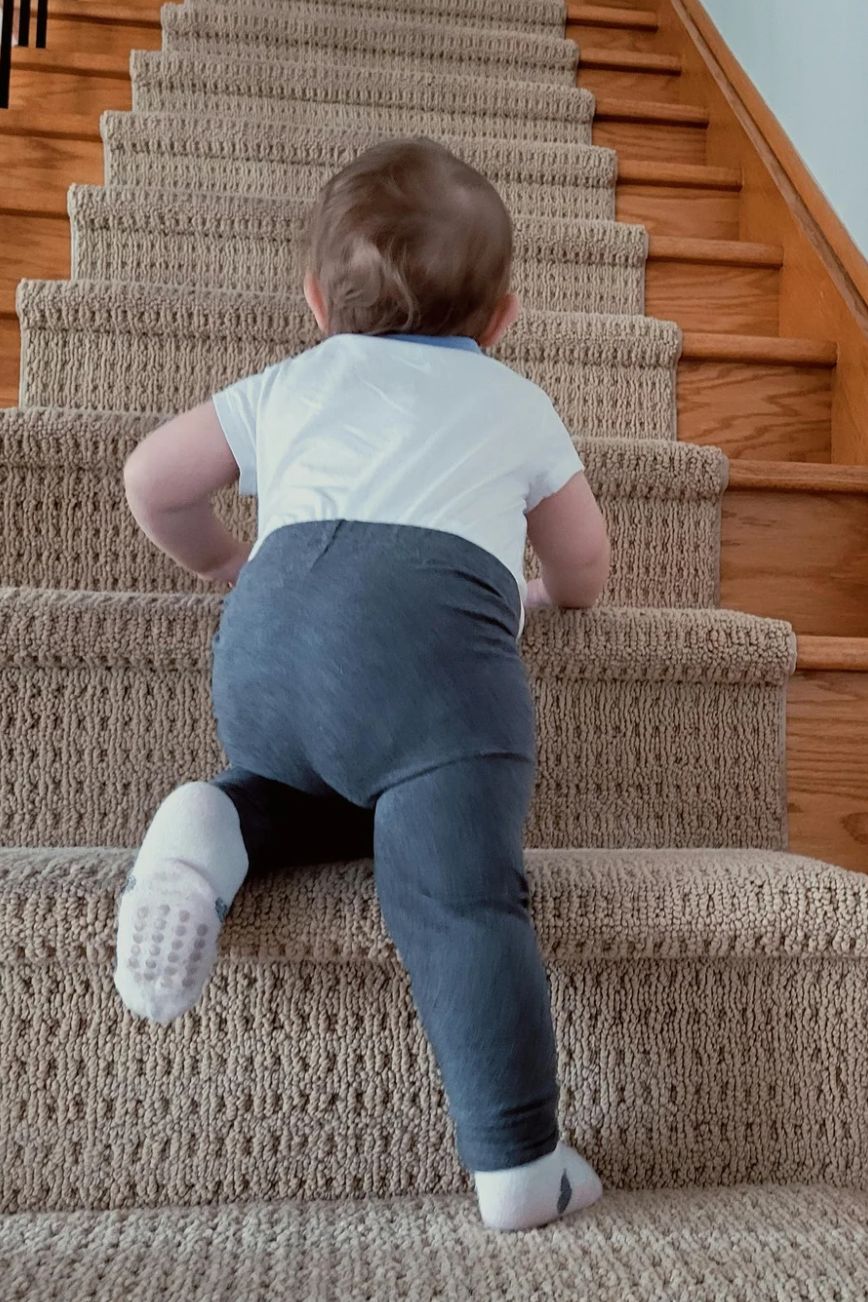
It’s the first frost of the year. You step out onto the deck stairs with a coffee in one hand and the dog’s leash in the other, and your foot keeps going where the step stopped. You catch the railing, spill the coffee, and stand there with your heart pounding, thinking about what would have happened if it had been your mother-in-law, who’s coming for the weekend and uses those same stairs twice a day. The steps look fine. They’ve always looked fine. That’s the problem with slippery stairs: nothing warns you until something slides.
Anti-slip stair treads are one of those small home upgrades that sit on the to-do list for years because they’re not urgent until suddenly they are. This guide looks at what they actually do, where they help most, what they cost compared with the alternatives, and how to decide whether they’re worth it for your home.
Falls Are the Leading Injury Risk at Home
The case for traction starts with the numbers. According to the Centers for Disease Control and Prevention, more than 14 million older adults, about one in four, report falling each year, and the age-adjusted death rate from falls among adults 65 and older rose 21 percent between 2018 and 2024, from 64.7 to 78.4 per 100,000.
Stairs are among the most common places those falls happen, and outdoor steps, which collect rain, frost, leaves, and algae, are the worst of them. Anything that reliably adds grip to a step is addressing a real and growing risk.
What Anti-Slip Treads Actually Do
A stair tread is a strip or plate of textured material fixed to the front portion of each step, where the ball of the foot lands. Its job is simple: give the shoe, boot, or bare foot something to bite into when the surface underneath is wet, icy, worn smooth, or coated with dust or pollen.
Good treads work in the conditions that cause slips, not just on dry days, and they stay in place through weather and foot traffic.
Where They Make the Biggest Difference
Not every staircase needs them. The ones that benefit most:
- Exterior wooden steps, especially north-facing ones that stay damp
- Deck and porch stairs that ice over in winter
- Dock, boathouse, and pool steps that are wet by design
- Composite decking stairs, which can be slick when wet
- Garage and basement steps with smooth-painted or dusty surfaces
- Any stairs used by older family members, young children, or pets
If a staircase in your home fits two or more of those descriptions, treads are close to a no-brainer.
Types of Treads and How They Compare
The market has a few distinct options:
- Adhesive grit tape: cheap and quick, but it peels at the edges, wears through, and rarely survives a winter outdoors
- Rubber or carpet stair mats: comfortable and good indoors, but they shift, trap moisture, and can themselves become trip hazards outside
- Screw-down plastic or composite treads: fastened mechanically, textured, UV-stable, and built to handle snow shovels, salt, and pressure washing; the most durable outdoor option
- Metal treads: very tough, often used on commercial steps, but expensive and can be cold and slippery when iced
- Grit-coated paint: a reasonable indoor fix, less reliable outside and hard to refresh
For most exterior staircases, mechanically fastened treads give the best combination of grip, lifespan, and low maintenance.
Deciding to Act Before the First Slip
The smartest time to add traction is before anyone has gone down. Rather than waiting for a scare, many homeowners choose to buy anti slip treads to protect your stairs the same season the deck or porch is built, so the steps are safe from day one.
That’s the approach GripStrip takes with its screw-down plastic treads, which come pre-punched and slotted so they fasten to wood with a screwdriver and the supplied screws, in sizes from a 2-by-12-inch extension strip to a wider 3.25-inch Max tread, with black, grey, beige, and safety-yellow colours and a UV package designed to hold up through rain, snow, salt, and shovelling for several years.
Composite, concrete, and metal steps can be fitted with pilot holes or the right screws. Whatever product you use, look for mechanical fastening, UV resistance, and a texture that works for bare feet and paws as well as boots.
What They Cost and What They Save
The economics are lopsided in the treads’ favour:
- A typical set of durable treads for a 6- to 10-step staircase costs roughly what a single dinner out does
- Installation takes an hour with a screwdriver
- They typically last several years outdoors before needing replacement
- A single fall can mean an emergency visit, weeks of recovery, and in older adults, a lasting loss of confidence
Measured against that, even a modest reduction in slip risk makes the purchase worthwhile.
How to Install Them Properly
Installation is simple, but a few details matter:
- Clean each step and let it dry fully
- Position the tread near the front edge where feet land, leaving a small gap from the nosing and from any adjacent strip
- Use the supplied screws on wood; pre-drill pilot holes for composite, concrete, or metal
- Keep treads consistent in position on every step so the eye and foot expect them
- Check screws and wear once a season and replace strips that have lost texture
Don’t cut treads to fit; use a smaller size instead, so the edges stay intact.
Beyond Treads: A Few Companions
Treads work best as part of a short safety list:
- A sturdy handrail on at least one side, ideally both
- Lighting at the top and bottom of outdoor stairs
- Prompt clearing of leaves, snow, and ice
- Contrasting colour on step edges so each one is easy to see
- Repair of loose or rotting boards
None of these replace traction, and traction doesn’t replace them.
Conclusion
Anti-slip stair treads are worth it for any staircase that gets wet, icy, worn, or heavy use, which covers most exterior steps and a fair number of indoor ones. They’re inexpensive, quick to install, last for years when they’re mechanically fastened and UV-stable, and address one of the leading causes of serious injury at home, a risk that the data shows is rising rather than falling.
The homeowner who adds them the season the deck is built never has to find out what the first frost would have done. Put them on before the slip, not after, and the stairs go back to being something nobody has to think about.


Leave a Reply