Key Takeaways
- Customization should give guests useful choices without slowing production.
- Texture, temperature, appearance, and portion placement can change after food leaves the kitchen.
- Packaging needs to be selected and tested with the actual menu item.
- Digital menus work best when they guide guests toward clear, confident decisions.
- Consistent build standards help protect quality across shifts, locations, and ordering channels.
Modern foodservice menus must perform in more places than the dining room. A single entrée may be served at a table, picked up at a counter, carried to an office, or delivered to a home. That makes menu development a connected process involving ingredients, assembly, packaging, and the moment the guest finally takes the first bite. Operators using private label food manufacturing can also create components that support a more distinct and repeatable menu build.
A dish that looks excellent when plated may not deliver the same experience after 20 minutes in a closed container. Steam can soften a crisp coating, sauce can spread into dry ingredients, and a loosely arranged garnish can shift during transport. Designing for these realities helps restaurants make their food more reliable across dine-in, takeout, drive-thru, catering, and delivery.
Why Menu Design Extends Beyond The Kitchen
Guests evaluate food with more than flavor. They notice whether it looks appetizing, stays at an enjoyable temperature, is easy to eat, and matches the description they saw while ordering. Packaging has a direct role in this experience. A 2025 National Restaurant Association survey found that 90 percent of off-premises customers said upgraded packaging that better preserves temperature, taste, and quality would make them likely to order a wider variety of items for takeout or delivery. Upgraded packaging that maintains food quality can therefore support both guest satisfaction and menu flexibility.
The practical goal is not to make every item suitable for every channel. It is to understand where each item performs well, then adjust the build, packaging, or digital ordering path when needed. A delicate plated dessert may be a dine-in specialty, while a layered grain bowl may be designed specifically to travel well.
Start With The Guest Experience
Define The Intended Eating Moment
Before choosing toppings or containers, clarify what the guest should experience. Is the item meant to be fresh and crisp, rich and comforting, light and portable, or indulgent and shareable? Consider whether it will be eaten immediately, carried to work, reheated at home, or consumed in a car. Also consider the eating method. Food intended for a fork has different packaging needs than a handheld sandwich or a layered bowl.
Map The Menu Journey
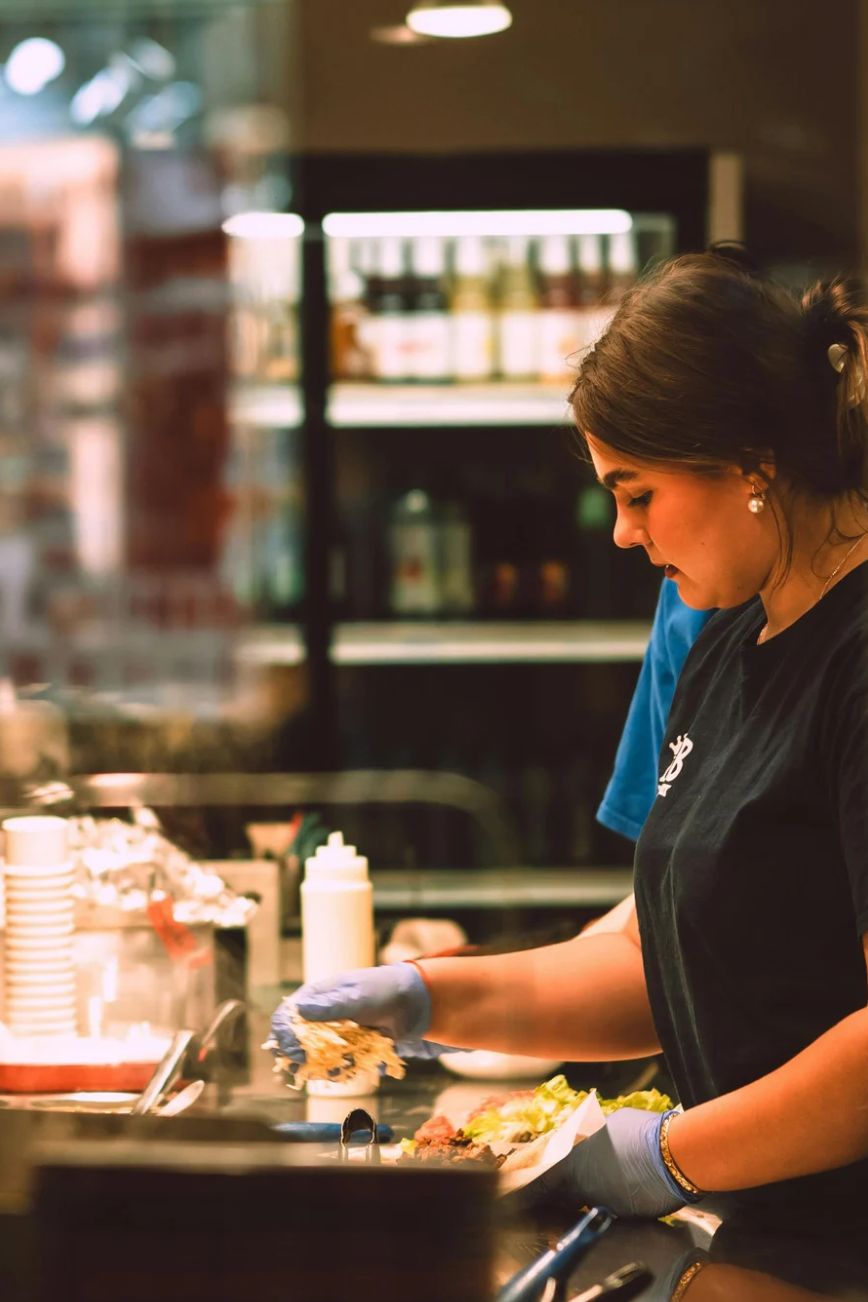
Review the full path from ingredient storage through preparation, assembly, holding, packaging, transport, and consumption. At each stage, ask what could change. A crunchy topping placed beside a warm sauce may soften. A cold garnish placed against a hot protein may wilt. A sauce cup that is too large or poorly secured may create spills and make the portion look inconsistent.
A candid, photorealistic documentary-style photo of a restaurant employee testing a freshly assembled takeout meal on a stainless-steel prep counter, with the open container, separated sauce cup, crisp topping, and handwritten notes visible in natural kitchen lighting.
Build Customization Without Kitchen Confusion
Customization can create value when it helps guests choose ingredients that suit their preferences. It can create friction when the menu offers too many similar modifiers, requires single-use ingredients, or relies on staff to remember complicated exceptions. Start by grouping choices according to their purpose, such as protein, sauce, spice level, crunch, or finishing flavor.
Keep a limited set of flexible components that work across several items. For example, one crunchy topping might work on salads, bowls, and wraps if it remains appealing in each format. Set a defined portion for every add-on, especially premium proteins, sauces, and toppings. Clear portions protect food cost and help guests receive the item they expect.
A Practical Customization Test
- List every modifier currently available.
- Identify choices that sell infrequently or delay assembly.
- Keep ingredients that support several menu items and ordering occasions.
- Test the revised selection during a busy service period.
- Review ticket times, order accuracy, waste, guest comments, and remake frequency.
Design For Texture, Not Just Flavor
Texture often determines whether a guest feels a meal delivered on its promise. Soft, creamy, toasted, crisp, chewy, and fresh elements can create useful contrast, but each component must survive its position in the build. Keep wet and dry ingredients separate when practical, and account for steam when packaging fried, baked, or dehydrated foods.
A simple example is a salad with a crisp topping and dressing packed separately. The guest can add both just before eating, preserving contrast, rather than receiving a salad that has become uniformly soft. The same approach can work for croutons, tortilla strips, fried onions, toasted seeds, and other dry finishing ingredients.
Texture Questions To Ask
- Does the topping remain crisp after the expected holding or delivery time?
- Does the garnish remain visible and intact under the lid?
- Does the item become difficult or messy to eat in its packaged form?
- Does the finished texture still match the digital menu description?
Match Packaging To The Food
Packaging should protect the food rather than simply contain it. Vented containers can help foods that release steam. Divided formats can keep sauces, sides, and cold ingredients apart. A properly sized container reduces movement during transport, while a sturdy lid protects delicate toppings and makes the meal easier for staff to label and for guests to open.
Evaluate package choices with real food under normal conditions. Test whether the container maintains the appropriate temperature, resists leaks, closes quickly during a rush, and supports the intended eating method. Review whether the package creates unnecessary storage complexity or excess waste, while ensuring any food-safety practices continue to align with applicable local requirements.
Use Digital Menus To Make Choices Easier
Online descriptions should explain more than ingredients. Tell guests whether an item is spicy, creamy, crisp, sweet, hearty, or designed to be shared. Use photos that accurately reflect the finished product, including realistic portions and toppings. Recommended combinations can simplify ordering for guests who want a quick decision while preserving customization for those who want it.
Guided ordering is becoming more important for complex menu formats. In March 2026, DoorDash introduced a visual, step-by-step pizza flow intended to replace long modifier lists with clearer choices. Visual ordering paths for complex pizza menus illustrate how digital menus can reduce friction without requiring a restaurant to offer fewer meaningful options.
Test Under Real Service Conditions
Test menu items during normal operations, not only during quiet prep periods. Prepare the item, package it using the planned process, hold it for the expected pickup or delivery window, and inspect its appearance, temperature, texture, and portion placement. Then ask several people to eat it without explaining the intended experience. Their first impressions can reveal issues that kitchen staff may overlook.
Track practical measures such as assembly time, order accuracy, guest complaints, remake rates, ingredient waste, and repeat purchases. Change one factor at a time, such as container type, ingredient placement, portion size, or sauce handling, so the result is easier to interpret.
Keep Quality Consistent Across Locations
Use build cards with photos, portion guidance, and simple assembly steps. Standard scoops, scales, or measuring tools help employees produce repeatable results. Train teams on why each component is placed where it is, especially when texture or packaging performance depends on the assembly order.
A useful 30-day improvement plan starts with one high-volume item that has a consistency issue. Record its current process and guest feedback, test one change, run the revision during busy periods, compare the results, then document the final standard and train the team. Small, measured changes are often more manageable than a broad menu overhaul.
Conclusion
A strong foodservice menu should look appealing at the counter, travel securely in a bag, and deliver the texture and flavor guests expect. Treat customization, ingredient selection, packaging, digital ordering, and training as parts of one system. When those parts work together, restaurants can offer meaningful choice while protecting speed, consistency, and quality.



Leave a Reply