
Market crashes don’t usually start with a neat headline. They start with a drop you notice on your super balance, a news alert at breakfast, and that tight feeling that maybe you should have sold last week. Plenty of capable people in Australia know they should stay invested, yet still refresh portfolio apps at midnight when the ASX has a rough session.
Confidence doesn’t come from predicting the next crash. It comes from having a setup you trust when prices move against you.
Why crashes hit harder than the numbers suggest
A 10% fall on paper feels larger in your head. That’s normal. You’re not only watching dollars move. You’re watching plans for a house deposit, retirement timing, or school fees get questioned in real time.
The stress often comes from three places at once: unclear goals, too much attention to daily noise, and no pre-agreed response when markets fall. Without those, every dip becomes a decision point. And decision points under pressure are where people lock in losses.
I’ve seen this pattern across clients for years. The ones who cope better aren’t calmer by nature. They simply decided their rules when markets were quiet.
What Australian investors should keep in perspective
Local markets are linked to global ones, so offshore shocks show up here quickly. Mining and banking heavyweights can amplify moves. Rate decisions from the RBA, China demand, and commodity prices all feed into sentiment on the ASX.
Still, long-term equity returns in Australia have rewarded people who stayed invested through ugly periods. That doesn’t mean every stock recovers on your timeline. It means broad, well-held portfolios have historically worked better for patient investors than repeated attempts to time exits and re-entries.
Cash has a role. So does fixed income. But sitting entirely in cash after a scare often feels safe while quietly creating another problem: your money stops working hard enough to meet future costs.
Decide your rules before the next drop
Write down answers to a few plain questions.
What is this money for, and when do you need it? Money needed inside two or three years generally shouldn’t sit in assets that can fall 20% in a bad year. Longer-term money can usually handle more movement.
How much of a fall can you tolerate without changing your lifestyle or your plan? If a 25% drop would force you to sell, your mix is probably too aggressive.
What will you do if markets fall 10%, 20%, or more? “I’ll review my plan” is vague. “I won’t sell quality holdings to chase safety unless my goals have changed” is clearer.
These rules won’t remove discomfort. They stop discomfort from becoming a trading strategy.
Diversification that actually lowers panic
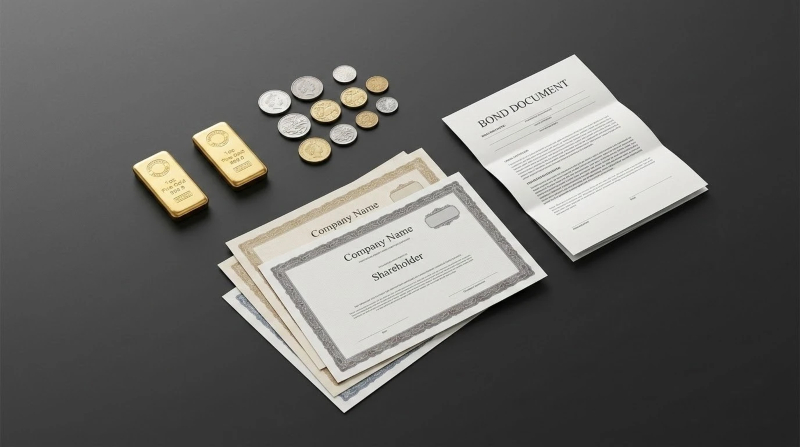
Diversification gets treated like a slogan. In practice it means you don’t rely on one share, one sector, or one outcome for the whole plan.
A practical mix for many Australians includes:
- Broad Australian and international shares for growth
- Bonds or defensive assets for ballast
- Cash for near-term spending and opportunistic top-ups
- A measured allocation to assets that don’t always move with equities
Some investors use physical precious metals as a stabilizing force. People who buy gold Melbourne through established dealers typically treat it as a defensive hedge rather than a quick profit opportunity. While gold may lag when stock markets soar, it often holds up better during periods of uncertainty. This strategy is effective only if you size the position appropriately and understand the realities of storage, premiums, and liquidity.
If your entire sense of safety depends on one asset class behaving, you haven’t diversified. You’ve concentrated your hope.
High returns without turning investing into a gamble
Everyone wants growth. The trouble starts when “growth” quietly becomes a hunt for the next hot tip.
A high return investment should still be judged on process: fees, risk, time horizon, and how it behaves when conditions turn. Higher expected returns almost always mean sharper drawdowns. If you can’t hold through those drawdowns, the advertised return was never really available to you.
Be careful with products that lead with yield or past performance and bury the risks. Complex structures, heavy leverage, and concentrated thematic bets can look clever in a rising market and brutal in a falling one.
Ask simple questions.
- What has to go right?
- What happens if it doesn’t?
- How long might recovery take?
Confidence grows when your return targets match your behaviour. A slightly lower expected return you can stick with often beats a higher one you’ll abandon at the worst moment.
Practical habits that reduce market stress
Check your portfolio on a schedule, not whenever headlines spike. Monthly or quarterly is enough for most long-term investors.
Automate contributions where you can. Regular investing through weak periods is dull, and dull is often effective.
Keep an emergency cash buffer outside your investment accounts. People panic harder when a market fall collides with a broken car or a lost contract and they have no cash buffer.
Use your super settings deliberately. Contribution levels, investment options, and insurance inside super deserve a proper review, not a set-and-forget from a decade ago.
Talk to a licensed adviser if your situation is complex: business income, property concentration, divorce, inheritance, or retirement within five years. Good advice is less about stock picks and more about keeping your plan coherent when emotions run hot.
Confidence is a system, not a mood
You won’t eliminate worry. Markets will fall again. Some years will test your patience and your spreadsheet assumptions.
What you can build is a system: clear goals, a mix you understand, rules for bad weeks, and a return target that doesn’t require heroics. Review it when your life changes, not every time the index does.
The investors who look calm during crashes usually did their uncomfortable thinking earlier. That’s available to you too.
Start with the plan, size your risks honestly, and let time do the heavy lifting.




Leave a Reply