Key Takeaways
- Tooth replacement decisions should consider health, comfort, appearance, maintenance, time, and cost.
- Bridges, dentures, implants, and implant-supported restorations have different advantages and care routines.
- A dental examination should come before selecting a treatment plan.
- Written estimates should include preparation, final restorations, follow-up care, and likely future maintenance.
- Consistent home care and regular dental visits help protect natural teeth, gums, and restorations.
Table of Contents
- Why Daily Life Should Guide the Decision
- How Main Tooth Replacement Options Compare
- What a Dental Exam Should Check
- What to Expect From Implant Treatment
- Comfort, Cleaning, and Everyday Use
- Treatment Time, Cost, and Long-Term Planning
- Questions to Ask Before Treatment
- Researching Local Care in Williston
- Final Thoughts
Replacing a missing tooth is about more than filling a visible space. For people in Williston, ND, a practical decision should account for comfort while eating, confidence when speaking, daily cleaning, travel, follow-up visits, and long-term maintenance. For a locally focused overview, dental implants Williston, ND is a resource from Big Sky Smile Center that explains single implants, implant-supported bridges and dentures, and full-mouth options for patients in Williston and Watford City. The practice describes extensive experience with full-mouth implant treatment, making its implant-focused information a useful starting point when comparing possible restoration types.
Whether the missing tooth is a visible front tooth or a hard-working back molar, the best option depends on the condition of the mouth and the person’s goals. A plan that works well for one neighbor may not be the right choice for someone with different gum health, bite forces, medical history, budget, or preference for removable versus fixed teeth.
Why Daily Life Should Guide the Decision
Missing teeth can affect more than a smile. A back tooth can change how comfortably a person chews steak, crisp vegetables, or other everyday foods, even when the gap is not obvious to others. Speech, self-confidence, and the ability to clean around nearby teeth also matter. According to the American Dental Association’s guidance on missing teeth, an open space may affect eating or speaking, while remaining teeth can shift and bone loss may occur around the area.
How Main Tooth Replacement Options Compare
Dental Bridges
A traditional bridge replaces a gap with an artificial tooth supported by neighboring teeth. It can be a practical option when adjacent teeth already need crowns or when implant surgery is not preferred. A bridge is fixed in place, but cleaning beneath and around it requires special attention.
Traditional Dentures
Partial dentures can replace several missing teeth, while complete dentures can replace an entire upper or lower arch. These appliances are removable for cleaning. They may require adjustments as the mouth changes, and some people need an adaptation period for speaking and chewing.
Single-Tooth Implants and Implant-Supported Restorations
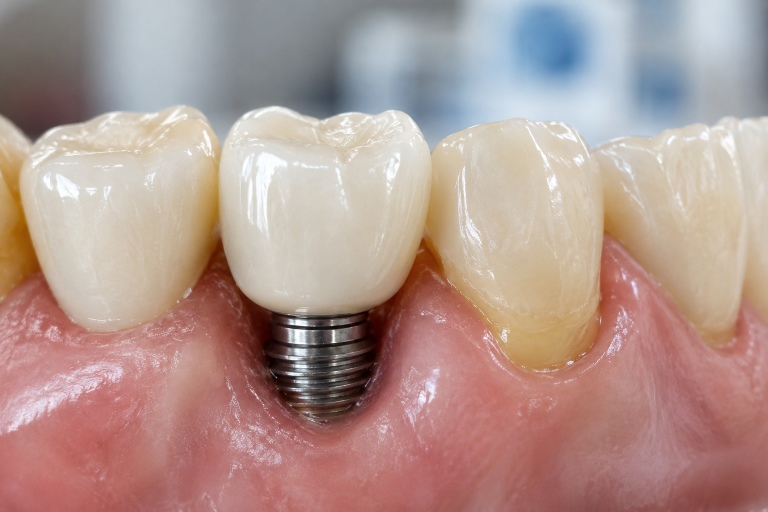
An implant is placed in the jawbone to support a crown, bridge, or denture. A single implant may replace one missing tooth without using neighboring teeth for support. Implant-supported dentures remain removable but are retained by implants. Fixed full-arch restorations use several implants to support a larger restoration in carefully evaluated cases.
What a Dental Exam Should Check
Before recommending any replacement option, a dentist may evaluate gum health, active infection, remaining teeth, jawbone support, bite alignment, clenching or grinding, nicotine use, medications, and health conditions that can affect healing. Diabetes and tobacco use, for example, can be relevant to surgical planning. Age alone does not determine whether someone is a candidate. Overall health, healing ability, oral hygiene, and treatment goals are more useful factors for a personalized decision.
What to Expect From Implant Treatment
Implant care is often completed in stages. The process generally starts with a consultation, health history, examination, and imaging. Some patients need preparatory treatment, such as managing gum disease, removing a damaged tooth, or addressing bone support. When appropriate, the implant is placed surgically and allowed time to heal. A custom crown, bridge, or denture is then attached, followed by visits to check the bite, comfort, and hygiene routine. Healing timelines vary, so it is important to ask what is realistic for the individual case.
Comfort, Cleaning, and Everyday Use
The right restoration should fit a person’s ability to maintain it every day. Removable dentures are taken out for cleaning. Fixed bridges and implant restorations stay in the mouth but need careful brushing around the gums and between supporting teeth or implants. A dentist may recommend floss threaders, interdental brushes, or other tools based on the design of the restoration. Guidance from the National Institute of Dental and Craniofacial Research on oral hygiene also emphasizes brushing and cleaning between teeth to remove plaque.
Some adjustment after receiving a new restoration can be expected. Persistent pain, swelling, bleeding, a loose appliance, or a bite that suddenly feels different should prompt a call to the dental office rather than a wait-and-see approach.
Treatment Time, Cost, and Long-Term Planning
A starting price rarely shows the full cost of tooth replacement. Ask for a written estimate that separates examinations, imaging, extractions, gum treatment, bone grafting, temporary teeth, the final restoration, adjustments, and possible future repairs. Treatment may take a few appointments or extend over several months when healing and preparatory care are needed. Comparing the expected care needs over time can be more useful than comparing one advertised number.
Questions to Ask Before Treatment
- Which options fit the present condition of my teeth, gums, and jawbone?
- Will the final restoration be fixed, removable, or a combination of both?
- What preparation and healing time should I expect?
- How will I clean the restoration at home?
- What should I do if it breaks, feels loose, or affects my bite?
- What does the estimate include, and what future maintenance may be needed?
- What alternatives could address the same problem?
Researching Local Care in Williston
When researching providers in the Williston area, look for clear explanations of treatment alternatives, appropriate diagnostic planning, discussion of maintenance needs, and a plan for follow-up care. It is reasonable to ask how the provider approaches single-tooth replacement, removable solutions, implant-supported options, and full-mouth rehabilitation. A thorough consultation should make room for questions and should not pressure a patient into choosing based only on advertising or a limited-time offer.
Final Thoughts
The best tooth replacement plan balances oral health, daily comfort, appearance, treatment time, care requirements, and budget. A thoughtful evaluation can help Williston patients choose a solution that supports their routine today while remaining realistic about future maintenance and dental care.





Leave a Reply