Key Takeaways
- Plan around daily routines before selecting finishes, furniture, or decorative features.
- Create clear zones for dining, relaxing, cooking, storage, planting, and movement.
- Address drainage, shade, lighting, privacy, and weather exposure before construction begins.
- Choose surfaces and plants that suit the climate, site conditions, and available maintenance time.
- Prioritize comfort and circulation so the space works as well for guests as it does on an ordinary day.
A well-planned yard can become an extension of the home, whether it is used for weekday dinners, quiet mornings, family gatherings, gardening, or play. Thoughtful custom landscaping begins by understanding how people actually move through and use a property, rather than starting with a list of trendy features.
The goal is not to fit every possible amenity into the yard. It is to create an outdoor environment that feels comfortable, accessible, and practical through changing seasons. A modest patio with useful shade, durable materials, and clear paths can often serve a household better than a large but disconnected collection of features.
Table Of Contents
- Why Outdoor Planning Matters In 2026
- Define The Main Purpose Of The Space
- Study The Property Before Choosing Features
- Create Outdoor Zones That Work Together
- Choose Materials For Comfort And Durability
- Plan For Shade, Rain, Wind, And Seasonal Use
- Use Plants To Add Beauty, Privacy, And Function
- Build A Realistic Budget And Project Sequence
- Avoid Common Outdoor Design Mistakes
- Common Questions About Outdoor Living Spaces
- Final Thoughts
1. Why Outdoor Planning Matters In 2026
Outdoor spaces increasingly support more than occasional entertaining. They can provide places to eat, rest, exercise, work on hobbies, and spend time with family. A 2026 survey of 1,191 U.S. homeowners found that 71% planned to hire contractors for outdoor projects, while nearly 84% of renovated outdoor spaces included a lounge or seating area and 66% included lighting. Those choices reflect a practical priority: people want yards that are usable after sunset and comfortable enough for regular use.
Function should guide the design. A beautiful space may still feel frustrating if it has no shade at the hottest time of day, poor drainage, narrow walking routes, or seating that is too far from the kitchen.
2. Define The Main Purpose Of The Space
Before choosing pavers, plants, or furniture, identify the three activities that matter most. For some households, that may mean outdoor meals, a safe play area, and room for a grill. For others, it may mean gardening, private relaxation, and easy access for visiting family members.
Questions To Ask First
- How many people will use the space on a normal day?
- Will children, pets, older adults, or guests with mobility needs use it?
- Is cooking, storage, gardening, exercise, or entertaining a regular priority?
- How much weekly watering, cleaning, pruning, and seasonal care is realistic?
List the required features for each priority, then remove additions that would rarely be used. This helps protect the budget and keeps the finished space focused.
3. Study The Property Before Choosing Features
Every successful plan responds to the property itself. Observe where the sun falls in the morning and afternoon, where water collects after rain, which areas receive strong wind, and where views need to be framed or screened. Note existing trees, utility locations, slopes, gates, driveways, and the distance from the kitchen to the proposed gathering area.
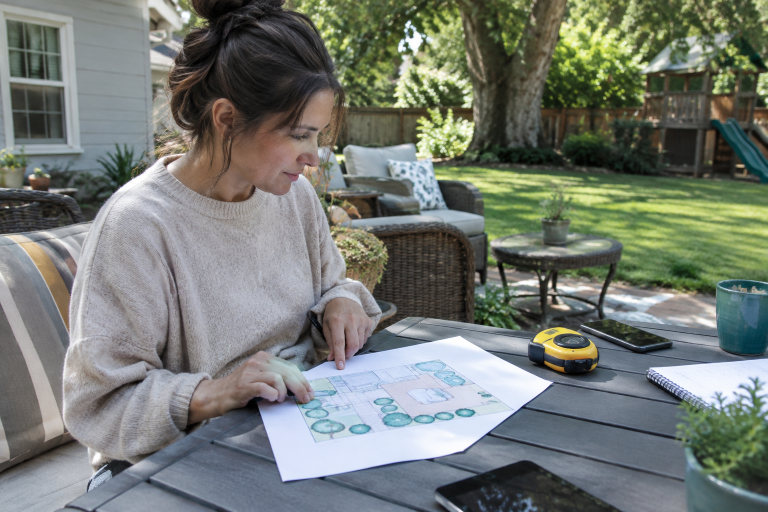
A simple site sketch can reveal problems early. It should show property lines, existing structures, drainage patterns, major trees, doors, paths, and the intended location of new features. This basic step can prevent a patio, planting bed, or seating area from being placed where it interferes with water flow or everyday movement.
4. Create Outdoor Zones That Work Together
Outdoor zones make a yard easier to use because each activity has a clear home. A dining area works best near food preparation and serving routes. A lounge area should support conversation, views, and comfortable seating. Cooking areas need safe clearances, storage, and durable work surfaces, while utility areas can hold bins, tools, toys, bikes, or firewood out of sight.
Connect these zones with obvious paths and leave enough open space for people to pass without squeezing around chairs or planters. Repeating a material, color, or plant form can make separate areas feel connected without making the yard feel overly formal.
5. Choose Materials For Comfort And Durability
Patio and path materials should be selected for more than appearance. Consider how hot a surface becomes in full sun, whether it can be slippery when wet, how it handles drainage, and how difficult it will be to clean or repair. Concrete, stone, gravel, wood, composite decking, and paving units can all be appropriate when matched to the site and expected use.
Scale matters, too. Oversized paving patterns or bulky retaining walls can overwhelm a compact yard. The lowest initial price is not always the least expensive option over time if frequent sealing, replacement, or repairs are required.
6. Plan For Shade, Rain, Wind, And Seasonal Use
Weather planning is what turns an attractive yard into a dependable living area. Shade can come from trees, umbrellas, pergolas, shade sails, or a covered patio. Surface grading, drains, and roof runoff should direct water away from the home and prevent standing water where people walk or sit.
Lighting should make entrances, steps, and paths easier to navigate while providing enough illumination for dining and gathering. For cooler weather, sheltered seating, blankets, outdoor-rated heaters, or a properly planned fire feature can make the space more inviting.
7. Use Plants To Add Beauty, Privacy, And Function
Plants can create privacy, soften hard surfaces, provide shade, define boundaries, and support seasonal interest. Use trees and layered shrubs for screening, flowering plants for pollinators, and herbs or vegetables where they are easy to reach from the house.
Choose plants for local light, soil, moisture, and winter conditions, then allow enough space for their mature size. Grouping plants with similar watering needs can simplify irrigation. The EPA recommends climate-appropriate plant choices, healthy soil, proper grading, and grouping plants by water needs as parts of a water-conscious landscape plan.
8. Build A Realistic Budget And Project Sequence
Set a full project range that includes design, preparation, labor, materials, permits, utilities, cleanup, and a contingency for surprises such as poor soil or buried obstacles. Protect the essentials first: drainage, grading, safe access, structural work, and electrical planning.
If the complete vision exceeds the budget, build in phases. Install needed conduits, drainage routes, or base preparation early, even if the lighting, outdoor kitchen, or planting phase comes later. This avoids tearing out finished work in the future.
9. Avoid Common Outdoor Design Mistakes
- Building hardscape before evaluating drainage and soil conditions.
- Buying furniture before measuring usable floor space, door swings, and walking routes.
- Ignoring nighttime visibility around steps, paths, and entrances.
- Using materials or plants that require more upkeep than the household can provide.
- Planting trees too close to foundations, fences, or overhead utilities.
- Adding multiple features without leaving enough flexible open space.
10. Common Questions About Outdoor Living Spaces
How Much Space Is Needed For An Outdoor Living Area?
There is no single ideal size. Small spaces can work well when furniture is scaled appropriately, and circulation remains clear. Larger yards benefit from stronger zoning so they do not feel scattered.
What Should Be Planned First: Landscaping Or Hardscaping?
Start with grading, drainage, access, utilities, and major structures. Planting can then soften edges, provide privacy, and connect the completed areas.
What Makes an Outdoor Space Low-Maintenance?
Durable surfaces, straightforward planting beds, efficient irrigation, good drainage, and plants suited to the site can reduce unnecessary upkeep.
Are Outdoor Kitchens Worth Adding?
They can be worthwhile for households that frequently cook outside. Consider how often the kitchen will be used, the distance from the indoor kitchen, utility needs, cleaning requirements, storage, and budget before committing.
11. Final Thoughts
The best outdoor living spaces feel easy to use on an ordinary day. They connect naturally to the home, respond to the property’s conditions, support real routines, and leave room for future changes. A thoughtful plan built around flow, comfort, durability, and manageable care can make any yard more useful for years to come.




Leave a Reply