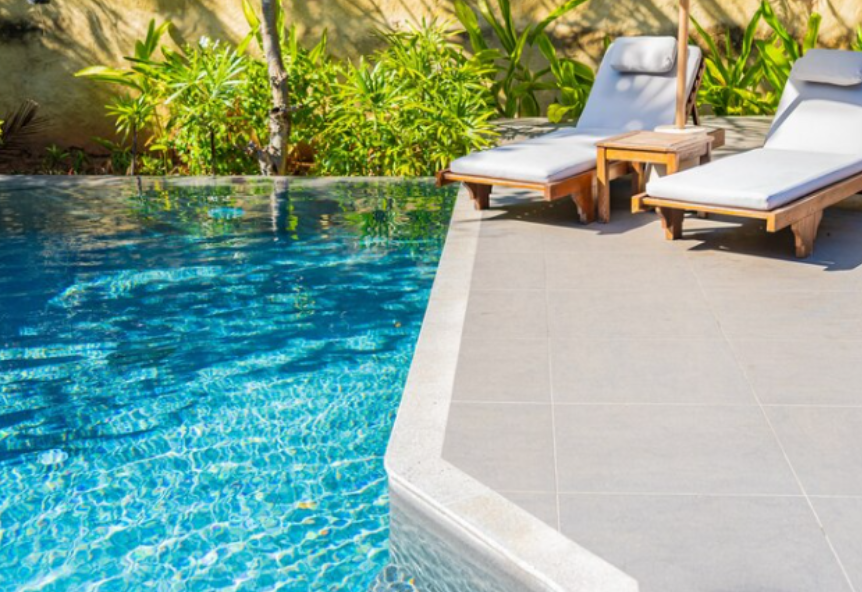
A pool deck in Port Orange works hard. It bakes in the sun for much of the year, gets splashed every time someone swims and carries bare feet, lounge chairs and the occasional dropped cooler.
When the concrete starts to crack, stain or fade, replacement isn’t the only answer. Resurfacing puts a new wear layer over a sound slab, and the right system can add grip underfoot and hold its color in the Florida sun.
Key Takeaways
- Resurfacing works on sound concrete. A slab that has sunk, lifted or broken apart may need repair or replacement first.
- There are two main families of finishes. Resin coatings, often with decorative flake or quartz, and stone resin systems that bind natural aggregate in a clear resin.
- Slip resistance comes from texture. Flake, quartz, stone aggregate and grit additives all add grip, but drainage and cleaning habits still matter.
- Sun exposure changes the specification. Outdoor surfaces need products rated for exterior use, especially a UV-stable topcoat.
- Preparation decides how long it lasts. Ask how the slab will be ground, repaired and checked before anything is applied.
Resurfacing or Replacing: Start With the Slab
Plenty of us don’t replace things around the house until they actually break, and a concrete pool deck suits that mindset. If the slab is structurally sound, resurfacing can refresh the look and add protection without tearing out concrete.
Surface problems are the usual reason to resurface: fading, stains, hairline cracks, rough spots or an old coating that’s peeling. These can usually be repaired and covered as part of the job.
Bigger problems need a different conversation. Sections that have sunk, lifted or cracked with uneven edges point to movement underneath, and a new surface won’t fix that.
The Main Resurfacing Options
Resin Coatings With Flake or Quartz
Most decorative coating systems are built in layers. A base coat goes down over prepared concrete, decorative vinyl flake or quartz granules are broadcast into it and a clear topcoat seals everything in.
Flake gives a speckled, granite-like look that hides dirt and small marks. Quartz uses sand-like granules for a more textured surface, and both are common choices for patios and pool decks because the texture adds traction.
The resin matters as much as the look. Polyaspartic topcoats are known for UV stability, while many standard epoxies can yellow in direct sun, so ask exactly which products make up each layer.
Stone Resin Resurfacing
Stone resin systems mix natural stone aggregate with a clear resin binder and trowel the blend over the existing concrete. The result is a textured, natural-stone look rather than a flat painted finish.
Many resin-bound stone surfaces are porous, so water drains through instead of sitting on top. That can help around a pool, but the binder still needs to be UV-stable, because some resins discolor in strong sun.
Slip Resistance Around the Pool
Wet concrete and bare feet are a risky combination. Texture is what gives a resurfaced deck its grip, whether it comes from flake, quartz, stone aggregate or a grit additive in the topcoat.
There’s a trade-off. More texture usually means more grip, but a very rough surface can be harder to clean and less comfortable underfoot, so ask to feel a finished sample when it’s wet.
Water management matters too. The deck should drain away from the pool and the house, and any spot where water sits needs attention, because texture alone doesn’t fix standing water.
UV Resistance in the Florida Sun
Port Orange sits near Florida’s Atlantic coast in Volusia County, where outdoor surfaces see strong sun for much of the year. That exposure is the main reason a product made for an indoor garage floor doesn’t automatically belong on a pool deck.
The topcoat takes most of the sun. A UV-stable topcoat helps keep colors from yellowing or fading, but it may not fully protect every layer beneath it, so confirm that each product in the system is approved for exterior use.
Color affects comfort as well as looks. Darker finishes absorb more heat, which makes lighter colors the more comfortable choice for a deck people cross barefoot.
Getting a Local Assessment in Port Orange
A site visit tells you more than any brochure. Raz-Barry Coatings is a veteran-owned contractor that serves Port Orange and handles residential projects as well as commercial concrete coatings. Its quartz coating system is rated for indoor and outdoor use, with UV stability and an anti-slip texture, and its process starts with diamond grinding to prepare the surface.
During the visit, ask what the installer sees in your slab, which system they’d recommend for your sun exposure and how the finished surface will feel when wet. A good installer explains the trade-offs rather than pushing a single product.
Preparation and Timing
A coating is only as good as its bond to the concrete. Installers usually diamond-grind the surface to remove weak material and open the pores, then repair cracks and chips before the first coat.
Existing finishes need attention too. Old paint, sealers or acrylic deck coatings may need to be removed or tested for compatibility, and joints should be planned for, since cracks that keep moving can show through a new surface.
Moisture can cause problems even when concrete looks dry, so ask how the slab will be checked. Summer afternoon storms can also push back a schedule, because most coatings need a dry surface to go down properly.
Return-to-use times vary by product. Get a written timeline for walking on the deck, putting furniture back and using the pool again.
Questions to Ask Before You Book
- Is my slab sound enough to resurface, and which repairs are included?
- Which products make up the base coat, broadcast and topcoat, and are they rated for outdoor use?
- How slip-resistant will the finish be when wet, and can I see a sample?
- How will you handle joints, existing coatings and moisture?
- When can we walk on it, put furniture back and use the pool?
- What routine cleaning and upkeep does the finish need?
Bringing It Together
For most Port Orange homeowners, the choice comes down to how the deck should look, how much grip it needs when wet and how well it will handle the sun. Flake and quartz coatings and stone resin systems can all work when they’re specified for outdoor use.
Start with an honest look at the slab, ask for UV-stable products and feel a wet sample before you commit. Those steps matter more than the color chart.
FAQ
Can you resurface a cracked pool deck? Hairline cracks and surface damage can usually be repaired and covered. Cracks caused by movement under the slab need to be addressed first, or they may show through the new surface.
Is a resurfaced pool deck slippery when wet? It depends on the texture. Flake, quartz, stone aggregate and grit additives all increase traction, so ask to test a wet sample before choosing.
Will a coating fade in the Florida sun? Systems made for outdoor use, especially those with a UV-stable topcoat, hold their color better than many indoor epoxies. Confirm that every layer is rated for exterior exposure.
How long does pool deck resurfacing take? It depends on the deck’s size, the repairs needed, the system and the weather. Ask for a written schedule that covers preparation, each coat and cure time.

Leave a Reply