Key Takeaways
- Lane-splitting can create sudden collision risks when drivers change lanes, open doors, turn, or move through stopped traffic.
- Illinois riders should understand that motorcycles are expected to use a full traffic lane, rather than travel between rows of vehicles.
- A lane-splitting crash can lead to traffic citations, insurance disputes, and arguments that the rider shares fault.
- Medical care, a police report, photographs, witness details, and preserved gear can all matter after a motorcycle collision.
- Fault is not always determined by a single action. The conduct of every driver involved, as well as the available evidence, can affect the outcome.
Traffic can back up quickly on Illinois roads, from I-90 near Rockford to busy corridors such as State Street and U.S. Route 20. In that frustration, some riders may be tempted to move between lines of stopped or slow-moving vehicles. But lane-splitting can put a motorcyclist within inches of vehicles whose drivers may not expect a bike to be there.
After a collision, riders seeking local legal guidance can visit https://tuitelaw.com/rockford-motorcycle-accident-attorney/ while focusing first on medical needs, crash reporting, and preserving evidence. The events immediately after a crash can shape both physical recovery and an insurance or injury claim.
What Lane-Splitting Means in Illinois
Lane-splitting generally refers to a motorcycle traveling between adjacent lanes of traffic moving in the same direction. It may happen when traffic is stopped at a light, crawling through construction, or congested during a commute. It differs from changing lanes through an open space or legally passing another vehicle by using a separate lane.
Illinois traffic law requires a vehicle to be driven, as nearly as practicable, entirely within a single lane and requires a driver to ensure that a lane change can be made safely. The state’s rules for roadways divided into lanes are important because a rider who travels between lanes may face allegations of unsafe lane use after a crash. Illinois motorcycle guidance also warns that lane sharing is usually prohibited and that cars and motorcycles need a full lane to operate safely.
Why Lane-Splitting Can Be So Dangerous
Even careful riders cannot control the decisions of nearby drivers. A driver stuck in traffic may suddenly change lanes to gain a few car lengths, turn toward an exit, open a door after stopping, or drift while checking a phone or navigation screen. A rider filtering through the narrow gap between vehicles has little room to brake, swerve, or escape.
The danger can increase when visibility is poor. Rain, early darkness, road spray, snow residue, construction barrels, and large trucks can limit sight lines on northern Illinois roads. Lane-splitting also places a motorcycle in common blind-spot areas, particularly near the rear corners of SUVs, pickups, delivery vans, and tractor-trailers.
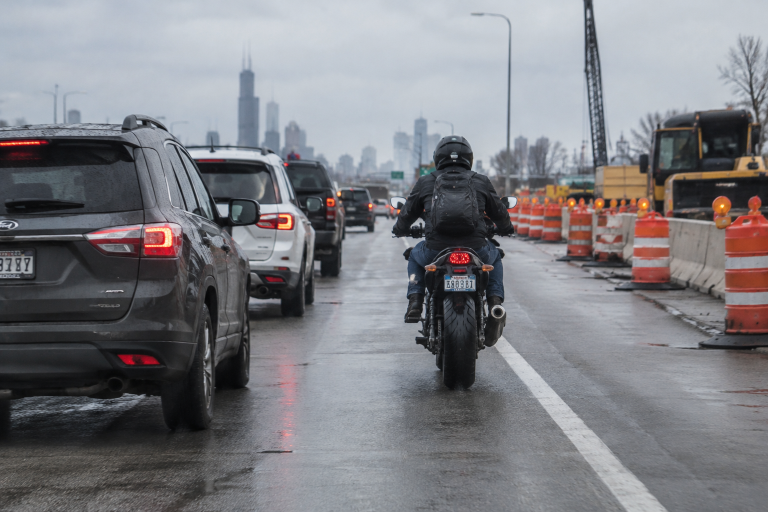
Motorcycles are already harder for other road users to detect because of their smaller profile. Federal safety guidance emphasizes that drivers should check mirrors and blind spots and that riders should leave room around their motorcycles, use lane markings properly, and ride defensively in traffic. These motorcycle safety practices are especially relevant near intersections, ramps, and congested multilane roads.
Possible Legal Consequences After a Lane-Splitting Crash
A Traffic Citation May Be Issued
Police officers investigating a crash can issue citations based on their observations, witness accounts, physical evidence, video, and statements from the people involved. Depending on the circumstances, an officer may consider lane-use rules, improper passing, speeding, failure to reduce speed, or other traffic laws. A citation is not the final word on civil fault, but it can become an important issue during an insurance claim or court case.
Insurance Companies May Argue the Rider Shared Fault
An insurer for the other driver may contend that the rider’s position between lanes contributed to the crash. The rider’s own insurer may also examine whether a policy exclusion, coverage limit, or traffic violation affects the claim. Insurance adjusters often review the police report, vehicle damage, photographs, recorded statements, surveillance footage, helmet-camera recordings, and medical records.
Illinois uses a modified comparative fault system in personal injury cases. In general, a person who is more than 50 percent at fault may be barred from recovering damages from another at-fault party. If the rider is 50 percent or less at fault, recoverable damages may be reduced by that percentage. The exact result depends on the facts, evidence, and applicable law.
Lane-Splitting Does Not Automatically Excuse Other Drivers
A rider’s conduct is only one part of the investigation. A driver who merges without checking a blind spot, turns across traffic, follows too closely, speeds, or drives while distracted may still bear substantial responsibility. The key question is usually how the crash occurred, not simply whether someone labels the incident as lane-splitting.
What to Do in the First 72 Hours
Put Safety and Medical Care First
Move out of active traffic only if it is safe to do so, and call 911 if someone is injured or the crash creates a roadway hazard. Do not assume that mild pain means there is no injury. Adrenaline can mask symptoms, and head, neck, back, and soft-tissue injuries may become more noticeable later. Seek prompt medical attention for severe headache, confusion, weakness, numbness, breathing trouble, fainting, unusual bleeding, or worsening pain.
Document the Scene Carefully
If conditions permit, take wide and close photographs of the roadway, lane markings, traffic signals, debris, weather, lighting, vehicle positions, damage, and visible injuries. Get names and contact information from witnesses. Note the direction each vehicle was traveling and look for nearby businesses, homes, or intersections that may have cameras. Do not argue about fault or guess about speed and distance at the scene.
Preserve the Motorcycle and Riding Gear
Do not repair, discard, sell, or clean damaged evidence before it is documented. Keep the motorcycle, helmet, jacket, gloves, boots, damaged parts, towing paperwork, repair estimates, maintenance records, and original photo or video files. Damage to protective gear may help explain the force or direction of impact.
Communicating With Insurers After the Crash
Report the crash to the appropriate insurer within the time required by the policy, but keep statements accurate and limited to known facts. Avoid speculation about who caused the crash, how fast anyone was traveling, or whether an injury will resolve quickly. Keep copies of claim numbers, emails, letters, estimates, medical bills, and any proposed release.
A fast settlement offer may not account for future treatment, lost income, pain, physical limitations, or motorcycle replacement costs. Before signing a release, riders should understand which claims and future rights it may waive.
Conclusion
Lane-splitting in Illinois can turn a moment of traffic frustration into a serious crash and a difficult legal dispute. The safest approach is to use a full lane, leave space around the motorcycle, and assume nearby drivers may not see the bike. If a crash occurs, prioritize medical care, report the incident, preserve evidence, and avoid making assumptions about fault before the facts are fully reviewed.


Leave a Reply