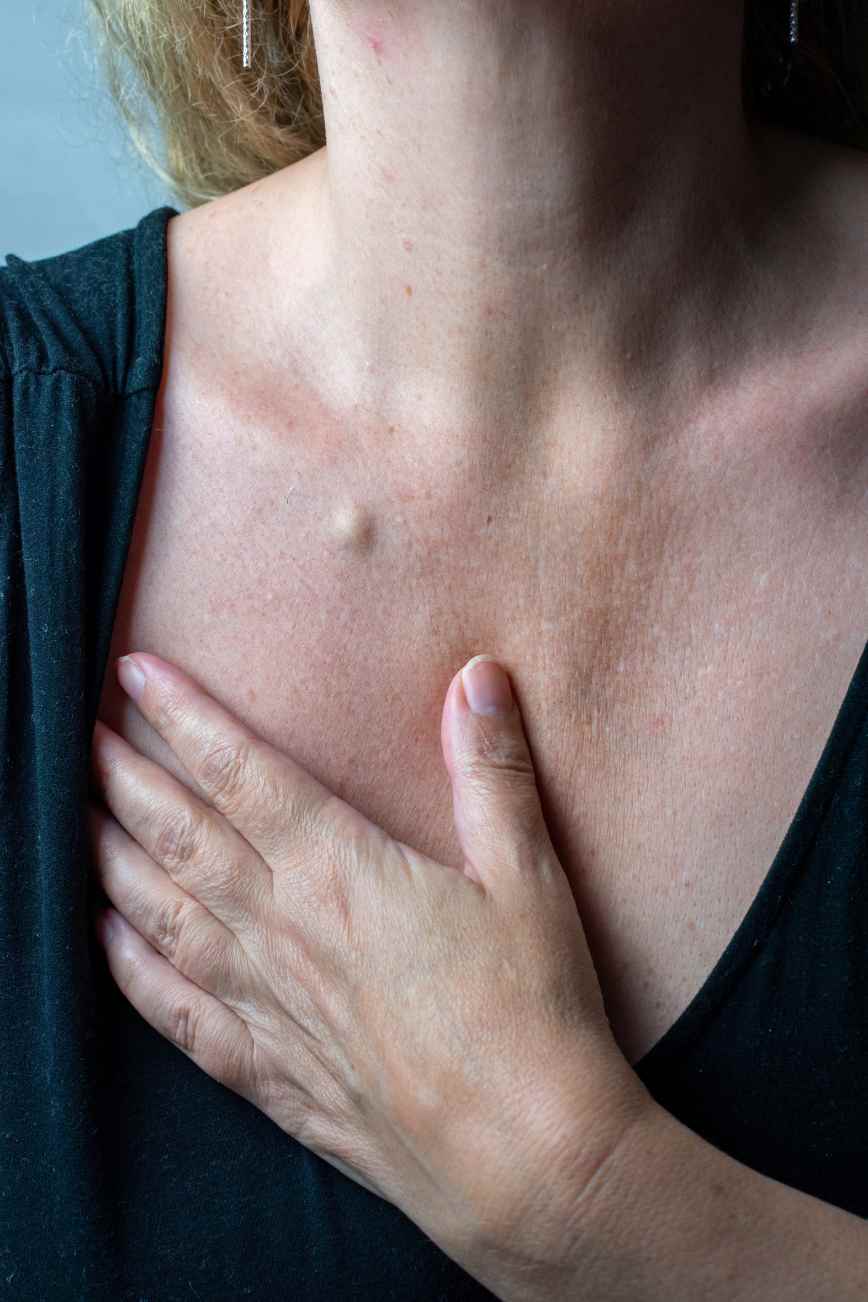
Look at the scar. A thin curved line, a few centimetres long, set inside the edge of the areola or tucked under the fold of the breast. It heals to a pale seam. Two women can carry the same scar in the same place, made with the same instruments on the same kind of morning, and it will not tell you which operation they had, or why.
That is the quiet confusion at the heart of excisional breast biopsy vs lumpectomy. Both remove a lump through a small cut. Both are usually day surgery. But one of them is asking a question and the other is answering it, and knowing which you have been offered changes what you should be asking in the room.
One asks, one treats
An excisional biopsy is a diagnostic operation. Something has been found, on a scan or under a hand, and the tissue needs to reach a laboratory so a pathologist can say what it is. The purpose is information. What happens next depends on the report.
A lumpectomy is a treatment. The diagnosis is already known. The purpose is to remove a cancer that has been identified, together with a rim of normal tissue around it, so that nothing is left at the edges.
Same lump, same room, different job. The first is a question. The second is a plan.
The margin is the difference
If you remember one thing, make it the rim.
In a diagnostic excision, the surgeon needs enough tissue for the pathologist to work with. In a lumpectomy, the surgeon is also trying to leave a clear boundary of healthy tissue all the way around the tumour, because the edges of what comes out are examined under the microscope and reported on. Clear edges are the point of the operation, not a by-product.
Which is why a lumpectomy takes more planning. A marker or fine wire may be placed beforehand to guide the surgeon to something that cannot be felt. The specimen may be marked so the laboratory knows which face sat closest to the skin. Lymph nodes may be assessed in the same sitting. None of that is needed when the only question is what is this.
Why the needle comes first
Most breast diagnoses today do not begin with an operation at all. They begin with a needle.
A core needle biopsy, usually guided by ultrasound or mammography, takes small cylinders of tissue under local anaesthetic. It is quick, leaves very little mark, and in most cases answers the question, which means any treatment that follows can be planned properly first time.
So if an open excisional biopsy is being suggested, there is usually a specific reason. The needle result may have been inconclusive, or it may not have matched what the imaging showed, and that sort of discrepancy is not left unresolved. The lesion may sit somewhere awkward to sample, or be a finding that cannot be settled on a small sample. Worth asking which applies to you, because the answer tells you a good deal about what the team is thinking.
When one operation becomes two
Here is the consequence that catches people out.
If a diagnostic excision comes back showing cancer, the margins were never planned around treating it, so a second operation is sometimes needed to take a clear rim around the original site. That is not a mistake and not a failure. It is the built-in cost of operating before the diagnosis was known.
It is also why surgeons would rather know first and cut once. Seen that way, the wait for a needle result stops feeling like delay and starts looking like a way to spare you a second visit to theatre.
The words all mean something
The vocabulary is confusing, and a lot of it overlaps.
Lumpectomy, wide local excision, partial mastectomy and breast-conserving surgery all describe the same family of treatment operations. Remove the cancer, keep the breast. The names vary by habit, country and how much tissue is involved. Excisional biopsy, open biopsy and surgical biopsy belong to the other family, the diagnostic one.
If a letter or consent form uses a word you have not met before, it is reasonable to ask which family it belongs to. Nobody will mind, and it heads off a lot of misunderstanding later.
Questions worth asking aloud
Before you sign anything, these are fair things to raise:
• Is this operation to find out what it is, or to treat something we already know?
• If it turns out to be cancer, will I need a second operation?
• Are margins being assessed, and when will I hear the result?
• Could a needle biopsy answer this instead, and if not, why not?
• Will anything be done about the lymph nodes at the same time?
• Who will talk me through the pathology report?
Write them down beforehand. Consultations move quickly, and the questions that matter most are the easiest to forget.
None of this decides anything for you. Which operation is right depends on your imaging, your biopsy and a conversation with the surgeon who has seen both. But knowing that one operation is a question and the other is an answer changes how you listen. Look again at that pale seam. It looks the same either way. What matters is what it was for, and you are allowed to know.




Leave a Reply