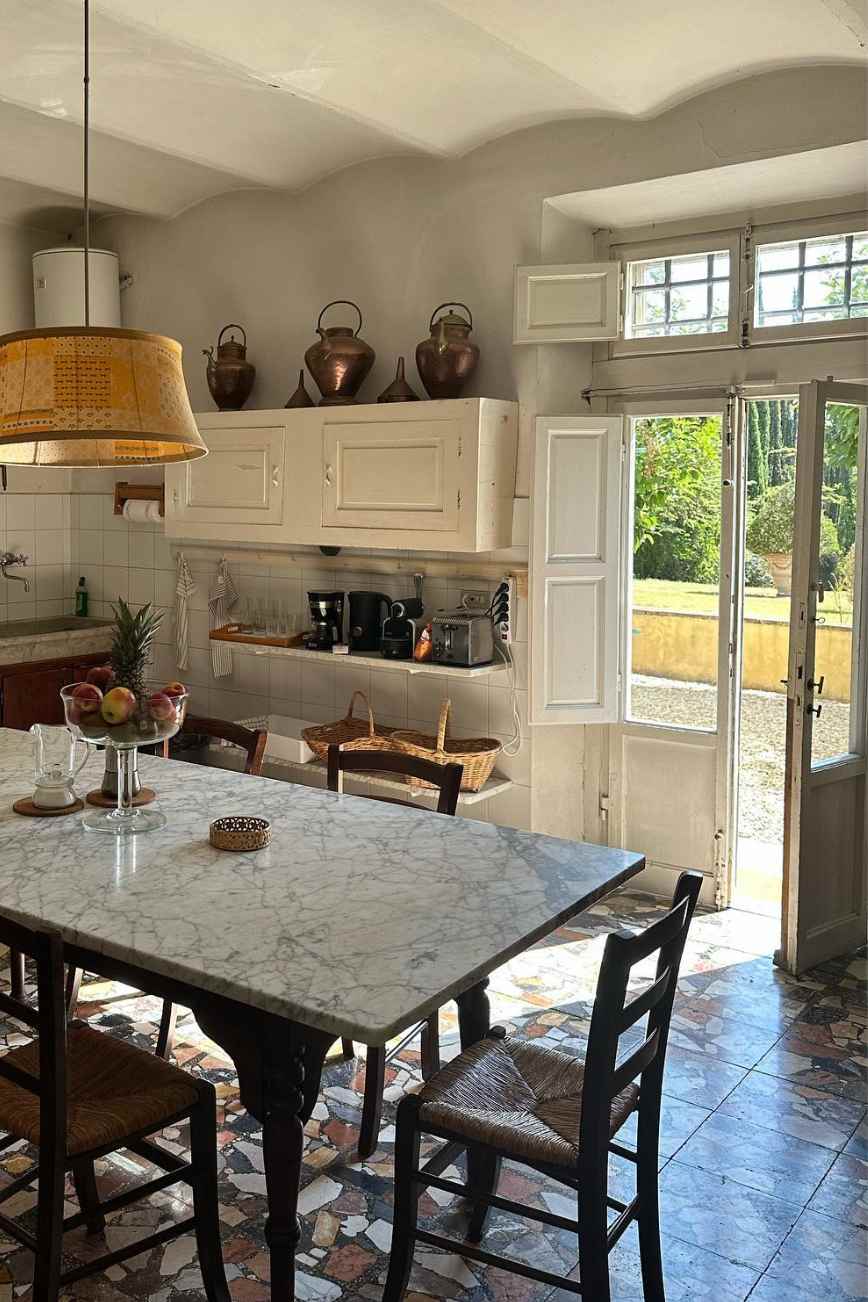
There is a particular kind of frustration that comes with eating outside when you’ve forgotten something in the kitchen. You know what I am talking about. You carry the plates out. Go back for the drinks. Someone needs a fork (and yes it is always my mother). Back and forth. Back and forth. By the time everybody has what they need, you’ve walked through the back door twelve times and your own dinner is getting cold.
Outdoor dining is supposed to make meals feel a little easier and with the right setup, it can. Creating a natural flow between the kitchen and backyard isn’t necessarily about building an enormous outdoor kitchen or completely remodeling your home. Sometimes a few practical changes to how the two spaces connect can make eating, cooking, and entertaining outside much more enjoyable.
Start With the Way You Actually Use the Space
Before changing anything, pay attention to what happens when you take a meal outside.
- Which door do you use?
- Where do people naturally gather?
- How far is the outdoor table from the kitchen?
- Is there somewhere to set a platter when your hands are full?
- Does everyone end up walking through the same narrow doorway?
These little details matter more than they seem. A beautiful outdoor dining area at the far end of the yard might photograph wonderfully, but it may not be where you want to carry dinner every night. The best layout is usually the one that makes everyday use easy.
If you’re building or making major changes to a property, you have more opportunity to think about this connection from the beginning. People considering renovations or even knock down rebuild homes can look at the kitchen and backyard as connected living areas rather than designing each one separately. That might mean placing the kitchen along the back of the house, adding wide doors, or positioning outdoor dining close enough that carrying food outside doesn’t become a workout.
Make the Doorway Do Some of the Work
The transition between the kitchen and backyard can change how the entire space feels. Large sliding or folding doors can visually connect the two areas when they’re open. Even a standard back door can work well if the path around it is kept clear. What you don’t want is an obstacle course.
If you have to squeeze between a chair and the kitchen island while carrying a hot casserole, the layout needs another look. Keep the route from the main food preparation area to the backyard as direct as possible. This is especially useful when people are coming in and out during a cookout. Someone carrying a tray shouldn’t have to navigate around everyone standing in the kitchen. Because they will be standing in the kitchen. People always stand in the kitchen.
Give Yourself Somewhere to Put Things Outside
One of the simplest improvements to an outdoor dining space is a work surface. It doesn’t have to be elaborate. A weather-resistant counter, outdoor cabinet, sturdy serving cart, or table near the cooking area gives you somewhere to set trays, utensils, condiments, and drinks. Without one, every available chair eventually becomes temporary storage.
Then someone needs the chair and now the buns are sitting on the cooler. You know how this goes. The buns start on the chair, then move to the cooler and before you know it they have made their way back into the house that you will have to go and get. A little outdoor storage can help too. Keep items that are specifically used outside close to where you need them.Outdoor-safe serving pieces, grilling utensils, and other supplies don’t necessarily need to travel back and forth every time you cook.
Decide How Much Cooking You Want to Do Outside
Not everyone needs a complete outdoor kitchen. Okay I do admit that I want one of these. However, some families primarily cook indoors and eat outside. Others want to do most of the cooking outdoors whenever the weather cooperates. Think about which one sounds like your household.
If outdoor cooking is something you do regularly, a dedicated cooking area can keep the person preparing dinner from constantly moving between the kitchen and backyard. A grill may be enough. For people who want more flexibility, an outdoor gas stove can make it possible to prepare sauces, vegetables, seafood, breakfast foods, and other dishes outside instead of relying entirely on a grill.
Any outdoor cooking appliance needs to be installed and operated according to its manufacturer’s requirements, with appropriate ventilation and clearance from combustible materials. Local building and gas regulations may also apply, particularly for permanent installations. Convenience matters, but not more than safety.
Put Indoor and Outdoor Dining Close Together
If possible, place your outdoor table relatively close to the kitchen. This sounds obvious until you see how many patios have a dining table positioned wherever it looks best rather than where it actually works best. You can still create different areas in the backyard. A lounge or fire pit can be farther away. The dining space benefits from being near the food because it makes spontaneous outdoor meals easier. When taking dinner outside requires carrying everything halfway across the property, you’re probably not going to do it very often. When the table is right outside the kitchen door, you might eat breakfast outside simply because the morning feels nice. That’s when an outdoor area starts becoming part of everyday life rather than something saved for parties.
Shade Can Determine Whether You Actually Use the Backyard
A beautiful outdoor dining table sitting in full afternoon sun may spend a lot of time empty. Shade changes everything. Depending on the space, that might come from a covered patio, pergola, awning, large umbrella, or strategically placed trees.
Pay attention to where the sun actually hits during the hours you’re most likely to use the backyard. The shady spot at 9 a.m. may be blazing hot by dinner. Lighting matters at the other end of the day. Good outdoor lighting should make it possible to see your food and safely move between the house and yard without making the backyard feel like a parking lot.
Keep Drinks From Creating Kitchen Traffic
If you entertain regularly, drinks can create more trips through the kitchen than food. Everybody needs ice. Someone wants water. Someone else wants another drink. Now six people are standing in front of the refrigerator while you’re trying to finish dinner.
A simple outdoor drink station can help. A cooler, beverage tub, or outdoor refrigerator can keep frequently requested drinks outside. Add cups, napkins, and a trash bin nearby and people can help themselves. You have just removed an entire category of questions from the kitchen. That alone may be worth it.
Use Similar Details to Connect the Spaces
The kitchen and backyard don’t need to match perfectly. They should simply feel like they belong to the same house. Repeating a few materials, finishes, or colors can create that connection. If the kitchen has warm wood, perhaps bring similar tones into the outdoor furniture. If you use black hardware indoors, black outdoor lighting or furniture frames can subtly carry that look outside.
Plants are another easy connection. Herbs near the kitchen door are practical and attractive, and they’re close enough that you might actually remember to use them. Don’t worry about making everything identical. A backyard should still feel like a backyard.
Plan for Cleanup Too
It’s easy to design around the fun part of outdoor dining and forget that someone has to clean up afterward. Put a trash bin somewhere convenient. Have a place for dirty dishes to land before they’re carried inside. If you’re planning a larger outdoor kitchen, a sink can be useful, provided plumbing and drainage are installed properly.
Even something as simple as a serving cart can help. Load the dirty dishes onto it and make one trip back to the kitchen instead of six. Anything that prevents the end of dinner from becoming a relay race is worth considering.
You Don’t Need a Huge Backyard
A good indoor-outdoor connection isn’t about square footage. A small patio directly outside the kitchen can be more useful than a huge entertaining area nobody wants to walk to. Start with how your family lives and what you want. Maybe you want a table for weeknight dinners. Maybe you need enough seating for extended family. Maybe all you really want to be happy is two chairs where you can drink coffee in the morning.
Start there and build around it. You can always add things later after you’ve lived with the space long enough to know what you’re missing. The goal isn’t to create the backyard everybody else has. It’s to make your kitchen and backyard work together well enough that taking dinner outside doesn’t require twelve trips through the back door. Although somebody will still forget the sauce because some things no floor plan can fix.



Leave a Reply