Key Takeaways
- Robotic systems assist surgeons, but they do not replace surgical judgment.
- They can support detailed planning, bone preparation, and implant positioning.
- Research suggests potential improvements in alignment, satisfaction, and selected short-term outcomes.
- Technology alone does not guarantee less pain, faster recovery, or a longer-lasting implant.
- Surgeon experience, overall health, rehabilitation, and follow-up care remain essential.
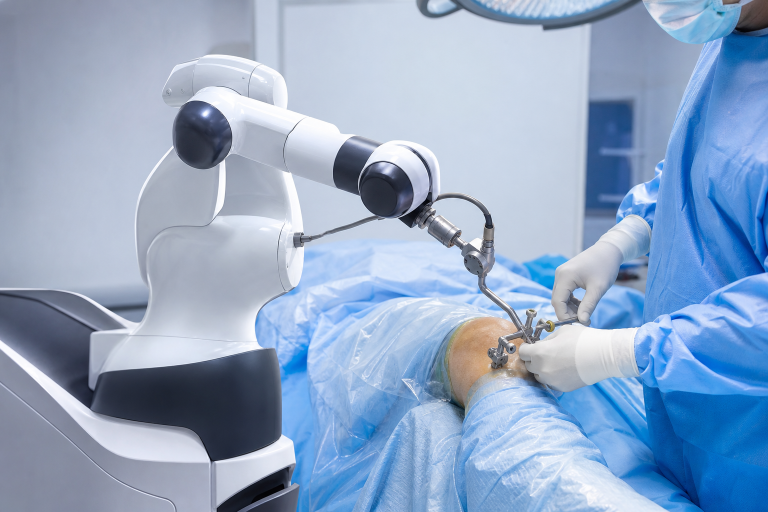
Robotic-assisted joint replacement is receiving more attention as more adults seek lasting relief from knee and hip arthritis while remaining active later in life. These procedures use computer-guided tools to help surgeons plan and carry out a replacement with close attention to each patient’s anatomy. Recent innovations in orthopedic surgery with Mako robotics demonstrate how digital planning and intraoperative guidance are becoming integral to modern orthopedic care. For patients, the important question is not whether the technology is impressive. It is whether it is appropriate for their diagnosis, goals, health history, and the surgeon’s recommended approach. Robotic assistance can add useful information and consistency, but it is one part of a larger treatment plan that begins long before surgery and continues through rehabilitation.
Why Robotic Assistance Is Receiving More Attention
Joint replacement remains a common option for people with advanced arthritis whose pain interferes with walking, work, sleep, or everyday movement. Conventional joint replacement can produce excellent results, yet robotic and computer-assisted systems are increasingly used to help surgeons reproduce a carefully selected plan. The goal is not novelty. It is to reduce avoidable variation during bone preparation, alignment, and soft-tissue balancing.
These systems may be used in knee or hip replacement, depending on the platform and the surgeon’s practice. They can help translate imaging, measurements, and the patient’s desired alignment strategy into real-time guidance in the operating room.
How The Technology Supports A Joint Replacement
- Patient assessment: The orthopedic team reviews symptoms, mobility, imaging, medical conditions, and the activities the patient hopes to return to.
- Surgical planning: Digital imaging and planning software help map joint anatomy and determine implant size, positioning, and alignment targets.
- Intraoperative guidance: Sensors, tracking tools, or a robotic arm provide measurements while the surgeon works.
- Implant positioning: The system can help guide bone preparation within the planned boundaries while the surgeon maintains control.
- Final checks: The surgeon evaluates stability, movement, alignment, and soft-tissue balance before completing the procedure.
What Patients May Gain From Robotic Assistance
Potential advantages include more detailed preoperative planning, patient-specific measurements, controlled bone preparation, and more consistent implant placement. These features may be particularly helpful when a surgeon aims to match the procedure to an individual’s anatomy rather than relying solely on generalized measurements. However, a precisely executed plan is not a promise of a perfect result. Pain, stiffness, swelling, satisfaction, and the pace of recovery are also affected by the joint’s condition before surgery, muscle strength, expectations, medical conditions, pain management, and commitment to physical therapy.
What Recent Research Says In 2026
A large retrospective study comparing robotic-assisted and conventional total knee replacement found lower rates of coded revision and mechanical loosening at 2 years in the robotic-assisted group. The research also reported fewer inpatient hospitalization encounters and opioid prescription fills within 90 days, while early complication rates were similar. Because the study was observational and followed patients for only two years, it shows an association rather than proof that robotics alone caused better long-term implant survival. Early patient-reported results are also encouraging. A prospective analysis involving more than 1,100 knee replacement patients found higher one-year satisfaction and quality-of-life improvement among patients treated with robotic assistance. These findings are meaningful, but satisfaction still depends on factors such as pain relief, restored function, expectations, communication, and rehabilitation progress.
Robotic-Assisted Surgery Is Not Fully Automated
A robot does not independently perform joint replacement surgery. The surgeon diagnoses the problem, selects the implant and surgical strategy, prepares the joint, responds to unexpected findings, and makes the final decisions throughout the operation. For example, a system may help guide a planned bone cut, but the surgeon determines whether that plan continues to fit the patient’s anatomy and soft tissues.
Who May Be A Candidate?
Potential candidates often have advanced knee or hip arthritis, persistent pain, reduced mobility, or difficulty with daily activities despite nonsurgical care. Medication, activity changes, exercise, injections, and physical therapy may be considered first. A full evaluation should include imaging, overall health, medications, prior surgery, bone quality, and recovery goals. Age alone should not determine whether someone is eligible for joint replacement.
When Robotic Assistance May Not Be The Best Fit
- Severe bone loss, prior hardware, or unusual anatomy may change the available surgical options.
- Heart, lung, infection, blood-clotting, or other health concerns may require additional planning or delay surgery.
- Hospitals and surgeons differ in available systems, training, and experience.
- Insurance coverage, imaging requirements, facility charges, and out-of-pocket costs can vary.
- A conventional joint replacement may be an excellent and appropriate choice.
Questions To Ask Before Surgery
- Why is joint replacement recommended now, and what nonsurgical options remain?
- What benefits are realistic for my specific condition and activity goals?
- Which robotic system, if any, will be used?
- How often do you perform this procedure with this technology?
- Will I need a CT scan or other advanced imaging before surgery?
- Which risks are most relevant to my medical history?
- What should I expect during the first six weeks of recovery?
- How much physical therapy will I need, and what costs might insurance not cover?
Recovery Still Depends On The Patient
Most patients begin moving soon after surgery, but meaningful recovery unfolds in stages over several months. Walking safely, controlling swelling, taking medication correctly, sleeping well, attending therapy, and gradually rebuilding strength all matter. Contact the care team promptly for any of the following: increased redness, drainage, fever, chest pain, shortness of breath, or sudden worsening of pain.
Common Questions About Robotic Joint Replacement
Does A Robot Perform The Surgery?
No. The robot assists with planning and guidance, while the surgeon remains in control of the procedure and all clinical decisions.
Is Robotic-Assisted Surgery Less Painful?
Some patients may experience a smoother early recovery, but pain varies widely. The procedure, anesthesia plan, health status, rehabilitation, and individual healing all affect comfort.
Does Robotic Surgery Guarantee A Better Result?
No surgical approach can guarantee a specific outcome. Robotic assistance is a tool that may support precision, but it cannot replace thoughtful patient selection and quality follow-up care.
Conclusion
Robotic-assisted joint replacement can support careful surgical planning, precise execution, and consistent implant positioning, but the technology is not automatically the best choice for every patient. The decision should remain personal and based on the individual’s condition, treatment goals, overall health, activity level, and recovery expectations. Patients should consider the potential benefits and limitations, additional costs, possible risks, surgeon experience, implant options, rehabilitation requirements, and the availability of appropriate follow-up care. It is also important to understand what robotic assistance can and cannot change compared with conventional joint replacement. An informed discussion with an experienced orthopedic team can help patients understand their options, ask practical questions, and determine whether robotic-assisted surgery is an appropriate fit for their needs in 2026.





Leave a Reply