Key Takeaways
- Florida’s modified comparative negligence rule determines how fault affects the recovery of damages in personal injury cases.
- A party can only recover damages if their share of fault is 50 percent or less, and that percentage reduces the compensation.
- This rule has widespread implications for anyone involved in accidents or liability claims in Florida.
Table of Contents
- What is Modified Comparative Negligence?
- How the Rule Works in Florida
- Applications in Personal Injury Cases
- Implications for Claimants
- Steps to Take After an Accident
- Conclusion
What is Modified Comparative Negligence?
Florida’s modified comparative negligence rule is a critical component of state law that determines how responsibility and financial recovery are addressed in cases where multiple parties share fault for an accident. Before March 2023, Florida used a pure comparative negligence system. Still, recent legislative changes introduced a modified rule, shifting how damages are awarded and the maximum percentage by which they can be reduced. By understanding these changes, individuals can better navigate personal injury claims and defensively protect their rights. For more information or legal guidance, seeking experienced advice from Quattrochi & Torres P.A. can be instrumental in evaluating your unique situation. The shift to a modified system means that victims found mostly at fault (over 50 percent) will not recover damages through a lawsuit. On the other hand, parties who are less at fault than others may receive compensation, albeit reduced by their percentage of fault. This often becomes relevant in car crashes, slip-and-falls, and other scenarios where fault can be disputed, making evidence and legal strategy ever more important in achieving just outcomes.
How the Rule Works in Florida
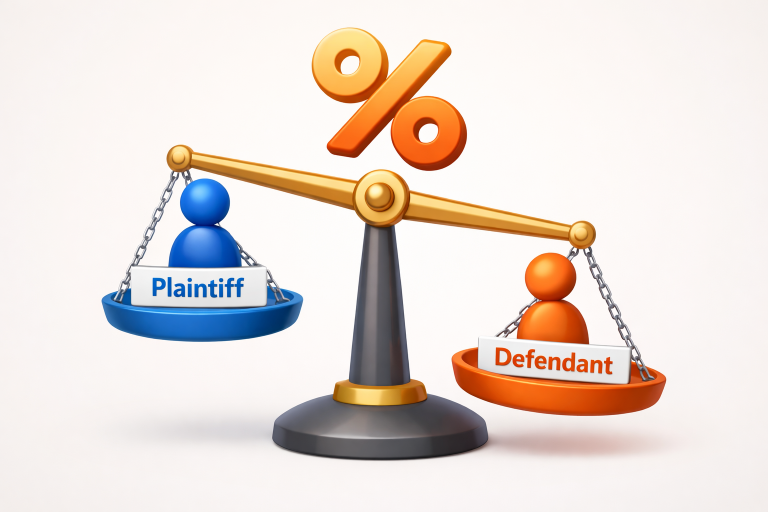
The current modified comparative negligence statute in Florida adopts what is commonly referred to as a “51% bar rule.” Under this structure, if you are found to be less than or equal to 50 percent responsible for an incident, you can recover damages. However, your compensation will be reduced by the percentage of fault you bear. For instance, if your total damages are $100,000 but you are deemed 30 percent at fault, you can only recover $70,000.
This rule creates a significant incentive for insurance companies and opposing parties to try to prove that an injured claimant shares more liability than they actually might. Documentation, witness accounts, and even professional accident reconstruction play important roles in determining each party’s share of fault. The clear articulation of comparative fault is especially important in multi-party accidents, where fault allocation can affect the outcomes for all parties. For further reading, see Florida Statutes Section 768.81, which provides the official legislative text on comparative fault.
Applications in Personal Injury Cases
Personal injury claims, such as motor vehicle collisions, premises liability (e.g., slip-and-fall cases), and product liability cases, are usually governed by the comparative negligence rule. For example, in a car accident, if both drivers made mistakes that contributed to the crash, the court or insurance adjusters will evaluate what portion of the blame each party carries. Even if one party was speeding and the other failed to yield, each party’s actions will be quantified as a percentage, which will affect how much each can collect in damages. Similarly, in a slip-and-fall case, if a property owner failed to fix a hazardous condition but the injured person was not paying attention or ignored warning signs, the jury may find both are partly at fault. This determination affects liability and the ultimate amount the injured person is entitled to receive. Navigating the nuances of modified comparative negligence in Florida courts highlights the importance of legal expertise and thorough case preparation.
Implications for Claimants
The adoption of this modified rule carries significant implications for individuals seeking compensation after an accident. Most importantly, if a court or insurance company concludes that a person was 51 percent or more responsible for their injuries, that person will be ineligible to recover damages at all. This creates a higher burden of proof for claimants and makes it more challenging to win compensation in close cases. Given these hurdles, claimants are encouraged to assess their situation realistically and collect as much evidence as possible immediately after an accident. Medical records, photographs of the scene, witness statements, and property records can make a crucial difference in establishing a party’s true percentage of fault.
Steps to Take After an Accident
- Document the Scene: Photograph the location, your injuries, and any contributing hazards. Obtain contact information from witnesses, if available.
- Seek Medical Treatment: Get evaluated by a healthcare professional, even for seemingly minor injuries. Medical reports serve as important evidence.
- Do Not Admit Fault: Be careful with statements to insurance adjusters, property managers, or other parties at the scene. Admitting fault can be used against you during claim evaluation.
- Consult an Attorney: Legal counsel can help interpret your likely share of fault and maximize your recovery under Florida’s modified comparative negligence rule.
- Preserve Records: Keeping receipts of related expenses, work absences, and correspondence can strengthen your claim and protect your rights.
Conclusion
Florida’s modified comparative negligence rule is pivotal for anyone facing an injury claim or lawsuit after an accident. The rule’s “51% bar” makes it vital for claimants to understand both the legal restrictions and practical implications of pursuing compensation. By gathering thorough evidence, seeking professional guidance, and acting promptly, claimants can better safeguard their right to recovery despite the challenges posed by shared-fault scenarios. Staying informed and getting reliable legal support ensures your best chance of obtaining fair and deserved compensation in Florida’s evolving legal landscape.




Leave a Reply