Key Takeaways
- Strong infrastructure planning begins with a clear record of what the city owns, its condition, and its risks.
- Water, wastewater, drainage, streets, sidewalks, and crossings should be considered together whenever possible.
- Phased projects can help Oregon communities address urgent needs while keeping borrowing and operating costs manageable.
- Early public input and complete project documentation can strengthen funding applications and construction decisions.
- Every project needs an operations and maintenance plan, not just a construction budget.
Why Small-City Infrastructure Planning Needs a Practical Oregon Approach
Oregon’s smaller cities often balance aging pipes, rural road connections, downtown access, stormwater concerns, and limited staff capacity simultaneously. Communities may face wet-season drainage challenges, summer water demands, wildfire-related disruptions, or growth near highways and employment areas. Working with engineering firms in Oregon can help city leaders turn local observations into a coordinated plan that is realistic for their budget, workforce, and long-term responsibilities.
The goal is not to build the biggest possible project. It is to solve the right problem at the right time, while leaving the city better prepared for future repairs, development, and changing conditions. A practical plan integrates public health, safety, reliable service, affordability, and residents’ everyday needs simultaneously.
Start With a Clear Picture of Existing Assets
Before choosing a project, create a usable inventory of major assets. It does not need to begin as a complex software system. A spreadsheet, map, inspection file, and organized maintenance records can provide a meaningful starting point. The important step is to document what the city has and identify where failure would have the greatest effect.
Useful Information to Collect
- Pipe material, diameter, age, repair history, and known leak locations.
- Road surface condition, traffic patterns, freight routes, and recurring pavement failures.
- Drainage trouble spots, culvert condition, flood reports, and blocked inlets.
- Water use, sewer overflows, treatment performance, and emergency callouts.
- Conditions at bridges, sidewalks, trails, crossings, lighting, and transit stops.
- Access concerns for schools, older adults, people with disabilities, and emergency vehicles.
Set Project Priorities That Match Community Needs
Project lists become more useful when city staff and elected officials use the same criteria to rank them. A simple scoring process can keep decisions focused on public value instead of whichever issue was discussed most recently.
A Simple Priority Scorecard
- Public health: Will the work reduce a drinking water, wastewater, or sanitation risk?
- Safety: Does it address unsafe crossings, roadway conflicts, flooding, or structural concerns?
- Reliability: Will it reduce leaks, service interruptions, emergency repairs, or street closures?
- Community value: Can it support homes, businesses, schools, public facilities, or emergency access?
- Readiness: Does the city have enough information, property access, and preliminary cost data to proceed?
- Long-term cost: Can the city operate, inspect, repair, and eventually replace the improvement?
Plan Water, Wastewater, Stormwater, and Roads Together
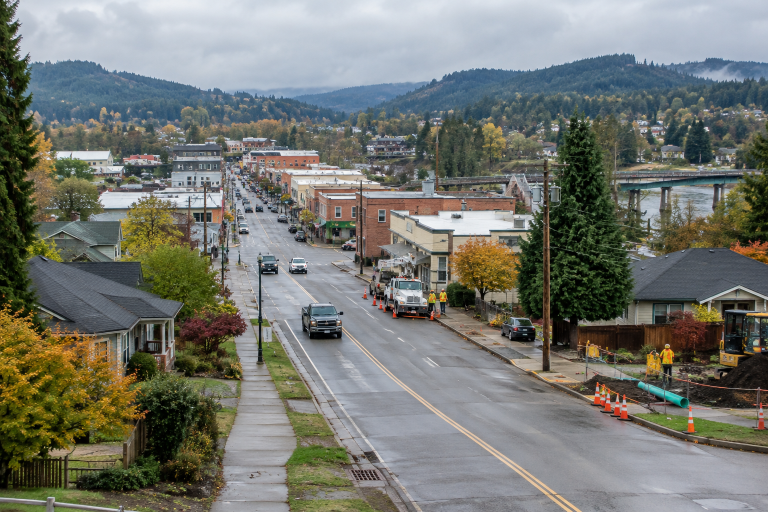
A street project is often an opportunity to look below the pavement. Rebuilding a road before inspecting or replacing a failing water line can create avoidable future excavation, cost, and disruption. Likewise, drainage improvements may simultaneously protect streets, nearby homes, and utility facilities.
When a project affects water quality, wastewater, or stormwater systems, cities can review Oregon clean-water financing options while the scope is still being developed. Starting that conversation early helps leaders understand whether planning, design, and construction should be separated into manageable steps.
Coordination Questions to Ask
- Are underground utilities due for repair before the roadway is repaved?
- Can drainage improvements reduce risks to streets, homes, and public buildings?
- Will anticipated development affect traffic volumes, water demand, or wastewater capacity?
- Can the work include sidewalks, safer crossings, lighting, bicycle connections, or transit access?
- Will crews be able to inspect and repair the completed system without excessive disruption?
Use Phased Projects to Manage Cost and Risk
Many small cities cannot, and should not, attempt to rebuild every deficient asset at once. Phasing lets a community address the most serious risks first, use lessons from early work to improve later phases, and spread financial commitments over multiple budget cycles.
For example, a city might replace the most failure-prone water mains before reconstructing an entire network, improve high-risk intersections before rebuilding a long corridor, or complete drainage work in neighborhoods with repeated flooding before expanding into lower-risk areas. A phased plan should still show the full destination so that early work fits future improvements.
Build a Strong Funding and Grant Strategy
Funding applications are stronger when the city can clearly explain the problem, identify who benefits, show a defensible cost estimate, and demonstrate how the asset will be maintained. Water systems seeking capacity-building support can also use the EPA’s resources for small drinking water systems to explore technical assistance, asset management, training, and financing pathways.
Funding Preparation Checklist
- Describe the need in plain language and connect it to community outcomes.
- Include maps, photographs, condition records, and a preliminary schedule.
- Separate planning, design, permitting, construction, and operating costs.
- Identify local funds, potential matching sources, and financing assumptions.
- Explain how staff will operate and maintain the finished improvement.
- Set measurable results, such as reduced water loss, fewer emergency repairs, or safer pedestrian access.
Use Data Without Losing the Human View
Maps, work orders, traffic counts, flow monitoring, and inspection records can reveal patterns that are easy to miss in day-to-day operations. However, data should complement local knowledge. Residents, maintenance crews, school staff, business owners, and emergency responders may know where a crossing feels unsafe, where water pools during storms, or where a service problem repeats.
Bring Residents Into the Process Early
Public input is most useful before the design is nearly complete. Short surveys, open houses, online maps, neighborhood meetings, and clear project updates can help cities identify access barriers and explain tradeoffs. Early engagement also gives residents a realistic opportunity to shape priorities rather than simply react to a finished proposal.
Design for Maintenance, Not Just Construction
A project is not complete when construction ends. City leaders should confirm who will inspect the asset, what training staff need, whether replacement parts are available, how the system performs during power or communications disruptions, and how future repairs will be funded. Designs that are difficult to operate can create expenses and risks long after the original project is closed.
Common Planning Mistakes to Avoid
- Selecting a solution before verifying the actual source of the problem.
- Using outdated construction costs without updating the budget and schedule.
- Ignoring staffing, energy, inspection, and replacement needs.
- Seeking public input only after major decisions have already been made.
- Repaving streets without reviewing underground utility conditions.
- Depending on one funding source without preparing alternatives.
A Step-by-Step Planning Framework for 2026
- Define the need for service, safety, capacity, or access.
- Inspect existing conditions and confirm the cause of the problem.
- Rank options by urgency, risk, cost, and public benefit.
- Gather input from the public and staff before selecting a preferred approach.
- Compare repair, replacement, expansion, partnerships, and phased construction.
- Prepare the scope, budget, schedule, maintenance plan, and funding materials.
- Measure results after completion and use them to refine future phases.
Conclusion
Small Oregon cities can make durable infrastructure decisions without taking on more than they can manage. Clear asset information, coordinated project timing, early public involvement, thoughtful funding preparation, and long-term maintenance planning create a stronger foundation for water and transportation investments. When communities view roads, drainage, utilities, and safe access as connected systems, each project can deliver more value for the people who rely on it every day.


Leave a Reply