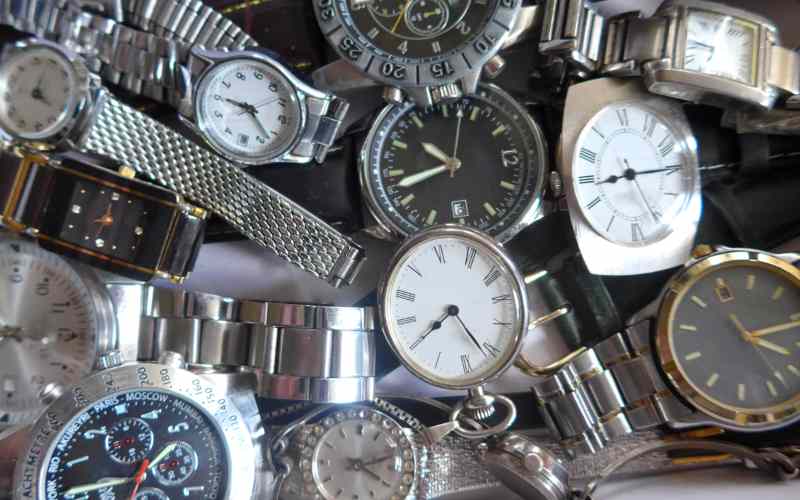
The watch market is vast, spanning everything from storied heritage manufacturers to nimble modern microbrands, with countless options at every price point and in every style imaginable. Whether you browse seiko watches or find yourself drawn toward Swiss and German alternatives, the fundamentals of choosing a reliable everyday wristwatch don’t really change. This guide cuts through the noise of brand prestige and trend-driven aesthetics to focus on what actually matters—movement types, case materials, water resistance, and serviceability—so you can make a confident, long-term purchase decision.
Understanding What “Reliability” Really Means
“A reliable everyday wristwatch is one that keeps consistent time with minimal maintenance under normal daily conditions.” In practice, reliability breaks down into two distinct qualities: accuracy (how precisely the watch tracks time) and durability (how well it holds up against impacts, moisture, and temperature swings). Your lifestyle determines which of these deserves more weight. Someone commuting to an office needs consistent timekeeping and scratch resistance; someone working outdoors needs serious water resistance and shock tolerance. Knowing which camp you fall into narrows the field considerably.
Watch Movements: Quartz vs. Mechanical for Daily Wear
The movement inside a watch defines its character and, just as importantly, its maintenance demands.
- Quartz movement: Battery-powered, exceptionally accurate, and essentially low-fuss. The go-to choice for anyone who wants dependable timekeeping without scheduling periodic servicing.
- Automatic movement: Self-winding through the natural motion of your wrist, requiring no battery, but needing professional servicing on a regular cycle—typically every three to five years, though this varies by manufacturer.
- Manual-wind movement: Operates on the same principles as an automatic but requires daily winding by hand; a choice favored by enthusiasts who genuinely enjoy that ritual.
A persistent misconception is that mechanical movements are inherently superior to quartz. In terms of raw accuracy, a quality quartz caliber will outperform a standard mechanical movement without breaking a sweat. The real question is about lifestyle fit: busy professionals often gravitate toward quartz for its simplicity, while enthusiasts who don’t mind the occasional service visit may find lasting satisfaction in a well-crafted automatic.
Materials and Build Quality: What Truly Affects Longevity
The materials used in a watch’s case and crystal have an outsized impact on how it holds up through years of daily wear.
- Stainless steel cases resist corrosion and handle everyday knocks reliably, which is why they remain the practical standard for most wearers.
- Titanium offers a notably lighter alternative with equally strong corrosion resistance, though its scratch characteristics differ from steel.
- Mineral glass crystals are affordable and perfectly adequate for light use, while sapphire crystal delivers significantly higher scratch resistance and is common from mid-range models upward.
- Water resistance ratings translate directly to real-world situations: a 30m rating handles hand-washing and a caught-in-the-rain moment; 100m or above is what you want for swimming.
Key Takeaway: For most everyday environments, pairing a stainless steel case with a sapphire crystal and at least 50m of water resistance gives you a solid foundation for long-term wearability.
Design and Legibility: Function Over Fashion
“Prioritize legibility over complexity if you want a watch you’ll reach for every day.” A clean dial with high-contrast hour markers tells you the time at a glance—during a meeting, behind the wheel, or anywhere else a second look isn’t an option. Case diameter should sit proportionally on your wrist, and lume (luminous paint applied to hands and indices) makes a real difference in low-light situations. Trend-driven designs packed with sub-dials can look striking on paper but often slow down a simple time-check in practice. Layouts that are timeless and versatile tend to earn their place across both casual and professional settings far more readily than novelty pieces.
Maintenance and Long-Term Costs
“Consider long-term servicing costs alongside the purchase price when choosing an everyday watch.” Quartz watches need periodic battery replacements and occasional gasket checks to maintain their water resistance rating. Mechanical watches involve more substantial servicing—cleaning and lubricating the movement—which costs more in both time and money. Opting for a brand with a well-established service network and documented parts availability makes that process considerably less painful over the watch’s lifespan. For precise service intervals, always defer to the manufacturer’s documentation or a qualified watchmaker rather than guesswork.
Balancing Budget, Brand, and Features
When comparing options, lean on concrete specifications—movement type, case material, crystal, water resistance rating—rather than logo recognition alone. Read product pages with a critical eye, separating verifiable technical data from marketing language. Cross-referencing manufacturer specs with independent reviews and watchmaker opinions tends to produce far more confident decisions than brand reputation alone ever could.
Everyday Watch Selection Checklist
- Movement type suited to your lifestyle (quartz for low maintenance; automatic for craftsmanship and long-term engagement)
- Case material appropriate for your daily environment (stainless steel or titanium covers most wearers)
- Crystal type offering adequate scratch resistance (sapphire is the preferred choice for mid-range and above)
- Water resistance rating that genuinely matches your actual activities
- A legible, versatile dial design that works across different settings
- A realistic understanding of long-term servicing requirements and their associated costs
Making the Right Choice for You
No single brand or price point suits every wearer, and anyone who tells you otherwise is probably selling something. The right everyday watch is the one that aligns with your lifestyle, your functional requirements, and the maintenance realities you’re willing to accept. Take the time to research specifications thoroughly, compare multiple options against the criteria above, and don’t hesitate to consult a knowledgeable watchmaker when technical questions arise. Ground your decision in verified manufacturer documentation and credible independent resources—not marketing claims—and you’ll be far better positioned to find a watch that genuinely earns its place on your wrist.



Leave a Reply